
-

Child's Play
A senior partner at a prestigious New York law firm, Kate Morgan couldn’t be prouder of her three grown children. Tamara, Anthony, and Claire all went to great schools, chose wonderful career paths, and would have made their father proud. A single mother for years after the death of her husband, Kate keeps a tight rein on her family, her career, and even her own emotions, never once asking herself if she truly knows her children . . . or if her hopes for them are the right ones, and what they want. She is about to find out. During one hectic summer in Manhattan, Kate’s world turns upside down. One child has been keeping an astonishing secret while another confesses to an equally shocking truth. A wonderful match and picture-book wedding are traded for a relationship that shakes Kate to her core. A totally inappropriate love affair and an out-of-wedlock baby complete the chaos. Challenged as a mother and as a successful independent woman herself, Kate struggles to keep up with a dizzying and escalating chain of events, and begins to realize that she has a part to play in the chaos. Because Kate too has kept secrets from her children. Sometimes the surprising choices our children make are the right ones . . . better than what we wanted for them. More often than not, parenting is about letting go of our dreams and embracing theirs.
-
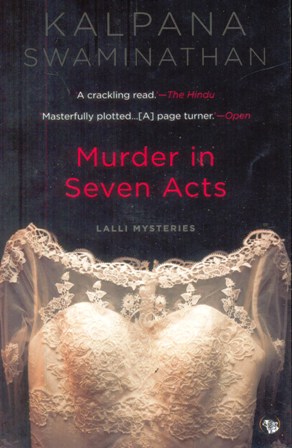
Murder In Seven Acts Lalli Mysteries
Seven brilliant stories of murder featuring one of Indian fiction most famous detectives—lalli—the retired policewoman who has been compared to Agatha Christie Miss Marple. In this gripping collection of stories, Lalli—sixty, silver-haired and tough as nails—solves some of the strangest cases of her career. A face keeps reappearing in unlikely places, until a crime of jealousy committed long ago is revealed. Letters from a dead woman hint at a murder that may or may not have happened. A hate-fuelled book-burning claims a life in horrific fashion; and a serial killer turns up in the Studio of a famous fashion designer. A suicide in a Mumbai suburb turns out to be something far more sinister; and a harmless desk ornament becomes a clue to a crime most artistically executed. Finally, for connoisseurs of crime fiction, The curtains come down with a story about lost love and a subtle, surprising revenge.
-
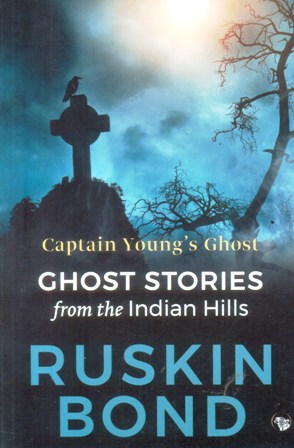
Captain Young’s Ghost Ghostly Tales From The India
Vintage storyteller Ruskin Bond has created some unforgettable characters in his novels and stories, but perhaps the most memorable and unusual among them are the ghosts and spirits he has encountered. These ghosts are not always horrific; they are mysterious and often benevolent, or lonely creatures looking for company among humans. Collected in these pages are new stories written specifically for this volume—including Captain Young’s Ghost—and classics such as A Face in the Dark and The Haunted Bicycle. Here you will find the spirit of a captain from the British army who returns to the town he founded and rues the lack of Irish whisky; a little boy, long dead, who continues to guide passers-by on treacherous mountain routes; a heartbroken young girl of long ago who seduces young men with her song, and another who longs for a family and some friends. Set in the hills and foothills of North India—the perfect haunt for ghosts and spirits—this collection by the master storyteller will leave you spellbound.
-
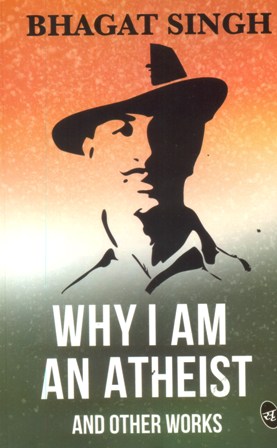
Why I Am An Atheist And Other Works
Bhagat Singh is a name that became synonymous with revolution in India’s struggle for Independence. This young boy brought about a change in the way people thought about freedom. He was well read and fought extensively for rights – his own, his comrades’ and his countrymen’s. A discussion with a friend soon turned into a matter of self-assessment for Bhagat Singh, leading to a discourse on why he chose to be an atheist. Even in the face of death at a very young age, his uncanny observation leads to his putting forth some pertinent questions. On another occasion, he was disappointed with his father’s plea in court for his innocence and chose to write a letter to him. This book is a collection of eighteen of his valued writings from within the walls of prison and outside it, which show us the resolve in his words, and the bravery in his acts subsequently.
-

Listen to Your Heartbeats
“The biggest adventure you can take is to live the life of your dreams.” Sonam was stuck in a routine life, till she decided to take a solo trip. And it could not have started on a more rocking note. She bumped into Rann Vijay Rathore (RV) on a hilltop, and could not take her eyes off him. And even later, she kept thinking about him, till they met again. With a fascinating twist in the tale, Sonam finds herself on a musical caravan with RV, Veer, Shiv and Aditi. Did Sonam's amber eyes compel RV to surprise her with the trip? And does it stay only a trip? RV finds Sonam angelic and tries to become a better version of himself, only for her. But it distances Sonam from RV and she feels her world crumbling. Can RV save his love in the nick of time? Will the gang of friends be able to find a road to their dreams? This is a story of passionate dreams, unending friendship and a love that knows no bounds. This electrifying read will compel you to chase your dreams and make you Listen to Your Heartbeats.
-

The Sinners
Vikram Oberoi is found dead in his penthouse. A few hours ago, his involvement in a sex scandal in NexGen Technologies made headlines across the world. Who is behind the sinister conspiracy that destroyed Vikram Oberoi, the philandering India Head of NexGen? Rivals within and outside the firm? One of his many jilted lovers or the miffed wife? A mysterious conspirator laying out honey traps to sabotage his plans? Or, is it the ghost of a sinful past that continues to haunt the Oberois? The Sinners is a fast-paced thriller with a shocking twist that unravels against the backdrop of corporate warfare, illicit relationships and ruthless seduction games.
-

The Giver of Stars
England, late 1930s, and Alice Wright - restless, stifled - makes an impulsive decision to marry wealthy American Bennett Van cleve and leave her home and family behind. But stuffy, disapproving baileyville, Kentucky, where her husband favours work over his wife, and is dominated by his overbearing father, is not the adventure - or the escape - that she hoped for. That is, until she meets Margery O'Hare - daughter of a notorious felon and a troublesome woman the town wishes to forget. Margery's on a mission to spread the wonder of books and reading to the poor and lost - and she needs Alice's help. Trekking alone under big open skies, through wild mountain forests, Alice, Margery and their fellow sisters of the trail discover freedom, friendship - and a life to call their own. But when baileyville turns against them, will their belief in one another - and the power of the written word - be enough to save them?.
-

In the Times of Article 370
The events in the book, give the reader a fair idea of how the 'system' used to work when Article 370 was in place and Jammu and Kashmir was a state. The book also helps explains how hybrid warfare is not just military in nature but has multiple dimensions. The book has special reference as to how the media operates in conflict zones. A must read for all those who aspire to be soldiers, work in administrative services or wish to be journalists.
-

The Class Of 83
At a time when Mumbai was plagued by underworld gangsters like Dawood Ibrahim, Iqbal Kaskar and Chhota Rajan, the batch of 1983 from the Police Training School (PTC) in Nashik-trained by the legendary Arvind Inamdar-produced a group of prominent encounter specialists who have been credited with bringing back the rule of law in the city. Famed even within this batch, trigger-happy senior police inspector Pradeep Sharma understood that to save the city from the clutches of the underworld, he would need to dilute rival gangs. The Class of 83 delves deep into the most famous (or infamous) encounters conducted by Sharma and his batch mates. Pradeep Sharma was arrested by the same department he had served for two-and-a-half decades. He faced the ignominy of jail, clubbed in the same cell as the criminals he had arrested. However, he fought for his honour, was acquitted and reinstated into service. In The Class of 83, S. Hussain Zaidi presents a one-of-a-kind story of a policeman's triumphs, struggles and redemption.
-

Love to Hurt You
She likes to hurt. He likes to kill. They say everyone wants love and happiness, but what if that is not true? ‘Everyone is entitled to one true love in life. My true love is money and fame.’ Garun ‘We had made a promise. You said we would be together forever. And you left me alone here.’ Maya ‘She sees pain, she sees fear, she sees his greedy urge to get out of her grip and run away. She smiles.’ Sasha Decadent, dark and gripping, Love to Hurt You is bestselling author Rahul Saini’s most surprising novel yet.
-
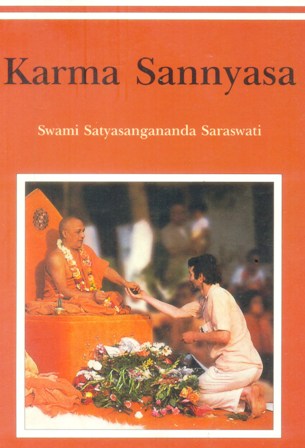
Karma Sannyasa
Karma Sannyasa is a dynamic and practical way of life that helps the individual to develop higher awareness through life rather than away from it. Its concept is to live life fully, to participate in all events externally, while internally maintaining an attitude of non-doership. This book talks about Karma Sannyasa.
-
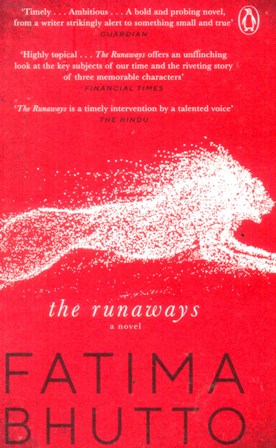
The Runaways..
Anita Rose lives in one of Karachi's biggest slums, languishing in poverty but aware that a larger destiny awaits her. Monty, whose father owns half of Karachi, realizes that his privileged life will never be the same again when the enigmatic and rebellious Layla joins his school. And far away in Portsmouth, Sunny fits in nowhere, drifting without a purpose-until he meets his charismatic, suntanned cousin Oz whose smile makes Sunny feel found. These three disparate lives will cross paths in the middle of a desert, a place where life and death walk hand-in-hand, and where their closely guarded secrets will force them to make a terrible choice.
-

The Choice.
TOC has been successfully applied in almost every area of human endeavor, from industry to healthcare to education. And while Eli Goldratt is indeed a scientist, an educator and a business leader, he is first and foremeost a philosopher, some say a genius. He is a thinker who provokes others to do the same. Often characterized as unconventional, and always stimulating ??? a slayer of sacred cows ??? Dr. Goldratt exhorts his readers to examine and reassess their lives and business practices by cultivating a different perspective and a clear new visionIn his latest book, The Choice, Goldratt once again presents his thought provoking approach, this time through a conversion with his daughter Efrat, as he explains to her his fundamental system of beliefs.
-
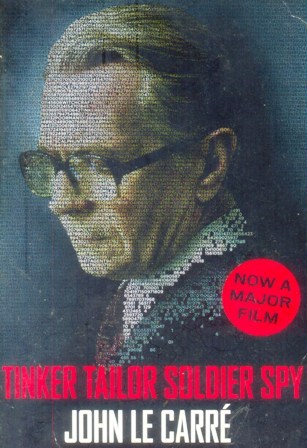
Tinker Tailor Soldier Spy
Tinker Tailor Soldier Spy is a classic spy novel written in 1974 that feature’s one of the author’s beloved fictitious characters George Smiley. George is a resourceful but seldom speaking Intelligence officer, who has been forced into retirement in previous installments by the author, but has to now return to help the government because of the freshly developed dire circumstances. There is a mole amidst the highly accomplished ‘Circus’, one of the most elite units of the British secret intelligence service, and it is up to George to help the government figure out which highly trained agent is working for the Russians. Tinker Tailor Soldier Spy is filled with suspense and espionage and is a thrilling tale till the final page. The story is highly detailed and is revealed to the reader using a series of flashbacks. The cat and mouse game ensues right from the get go with some of the most intelligent minds trying to figure out which amongst them does not belong in the agency. This Film-tie edition was published by Sceptre Publishing in 2011 and is available in paperback. Key Features: This is the latest film tie-in edition of the classic spy novel Tinker Tailor Soldier Spy.
-

How The Dukes Stole Christmas
“Meet Me in Mayfair” by Tessa Dare Louisa Ward needs a Christmas miracle. Unless she catches a wealthy husband at the ball, the Duke of Thorndale will evict her family from their home. When Louisa finds herself waltzing with the heartless Thorndale, she’s unnerved by his handsome looks—and surprising charm. The Duke of Christmas Present” by Sarah MacLean Rich and ruthless, Eben, Duke of Allryd doesn’t care for the holidays. But when Lady Jacqueline Mosby returns to town after a long absence, Eben falls under the spell of Christmas—and the woman he never stopped loving. Heiress Alone” by Sophie Jordan When Annis Bannister finds herself stranded in the Highlands during a Christmas snowstorm, she must fend off brigands terrorizing the countryside. Her only hope falls on her neighbor, a surly hermit duke who unravels her with a kiss. Christmas in Central Park” by Joanna Shupe Mrs. Rose Walker pens a popular advice/recipe column. No one knows Rose can’t even boil water. When her boss, Duke Havemeyer, insists she host a Christmas party, Rose must find a husband, an empty mansion, and a cook. But Rose fears her plan is failing—especially when Duke’s attentions make her want to step under the mistletoe with him.
-
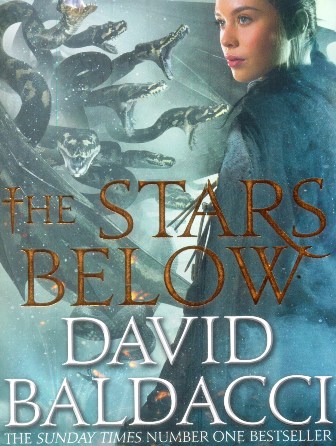
The Stars Below
This is it. Vega Jane has tried to outrun, outsmart, and outlast her enemy, but the showdown she has dreaded is finally here. Her ragtag crew must take a stand against a fully trained army, knowing the odds are impossible, knowing each of them could die for nothing. But when evil comes, heroes stand to meet it. When injustice appears, the only choice is to stand and fight. David Baldacci's The Stars Below is the fourth novel and the epic conclusion to his Vega Jane series.
-

Heiress Gone Wild
When Jonathan Deverill promised a dying friend he’d be guardian to the man’s daughter, he envisioned a girl in pigtails and pinafores, a child he could leave behind in some finishing school. Problem is, his ward is actually a fully-grown, defiant beauty whose longing for romance threatens to make his guardianship a living hell New York heiress Marjorie McGann wants a London season and a titled husband who can help her spend the Yankee millions she’s inherited, and she thinks her new British guardian is the perfect person to help her find him. But Jonathan has no intention of letting his friend’s fortune be squandered. Under his watchful, protective eye, Marjorie finds romance hard to come by . . . until one fateful night when her own guardian’s devastating kisses makes her wonder if the greatest romance of all might be right in front of her.
-
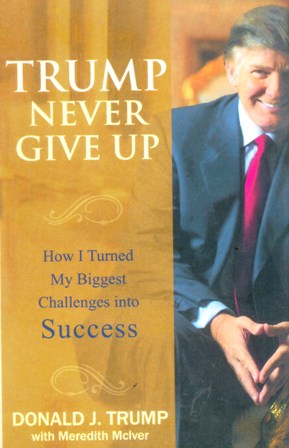
Trump Never Give Up How I Turned My Biggest Challe
Trump Never Give Up tells the stories of Trump's biggest challenges, lowest moments and worst mistakes and how he overcame them and turned them into successes. Each chapter includes a dramatic, inspiring story from Trump's career, wisdom, pep talks, inspiration and advice that everyone can relate to, with additional coaching tips from adversity research expert Paul Stoltz Table of Contents: Acknowledgments Foreword by. Michael Sexton, Trump University Introduction. What Goes Through My Mind When I Hear the Word No The Lowest Moment in My Life and How I Fought Back: A Billion Dollars in the Hole Failure is Not Permanent: Wholeness and the Art of the Comeback The Apprentice Was Supposed to Be a Big Mistake: Get the Best Advice You Can, Then Trust Your Gut Is This a Blip or a Catastrophe? Be Prepared for Things That Happen Outside Your Game Plan I Love a Good Fight: The Trump SoHo Hotel Condominium Watch Out For Brain Cramps: Keep The Big Picture In Mind Expect Problems and You'll Be Ready When They Come: Getting Trump Tower off the Ground When the Other Side Expects a Duel, Offer a Partnership: Trump International Golf Links Scotland How I Persuade People: Turning No's into Yes's Sometimes You Have to Swallow Your Pride: Trump International Hotel and Tower, New York Courage Isn't The Absence of Fear, It's The Conquering of Fear Be Passionate: It's the Only Way to Move Mountains If You See Big Problems, Look for Big Opportunities: Transforming a Dilapidated Neighborhood into a World-Class Hot Spot Cultivate a Sense of Discovery: A Letter From My Kindergarten Teacher Know When to Cut Your Losses (or Why I Refuse to Believe Richard Branson is Wealthy if He Owns an Airline): Trump Shuttle If You Think You Can Complete a 6-Year Project in 6 Months - You Probably Can: Wollman Rink, Central Park, NYC Don't Watch Life From The Sidelines Don't Let Fear Stop You - Even in Front of Millions of People: Doubts Will Continue to Surface, Even after You've Made up Your Mind to Go Forward Sometimes You Have to Start Over: Dubai I Told My Friend He Was A Big Time Loser: The Power of Focus Defending the Flag When Your Wardrobe Malfunctions in Front of 10,000 People - Make It Part of Your Act: Two Public Speaking Screw-ups A Lesson From The Apprentice: Never Quit Don't Get Complacent - Thinking You're Foolproof is a Good Way to Set Yourself up for a Big Mistake: How New Trump Projects Happen Only in New York - This City Will Serve up Problems and Solutions You Won't Find Anywhere Else Enemies Can Turn into Friends: The Hilton Hotel in Atlantic City How to De-Stress You Will Be Attacked for Trying to Change Anything: Mar-a-Lago Set the Record Straight Do Give Up On Complainers Be Patient: You May Have to Wait 30 Years for a Deal to Pay Off Get Motivated by Hearing No: Turn a Negative into a Positive The Turnaround Always Starts with Creative, Positive Thinking: 1200 Foreclosed Apartments in Cincinnati Get the Most From Every Day How Would I Look with a Shaved Head? WrestleMania When You're Attacked, Bite Back: A Book and 5 Billion dollars Lawsuit Prime Real Estate Falls into the Pacific - Now What? Trump National Golf Course in Palos Verdes, CA Where Others Fail - There's Your Opportunity: A Wall Street Story Appendix A - Trump's Top Ten List for Success Appendix B - Trump's Rules for Negotiating
-
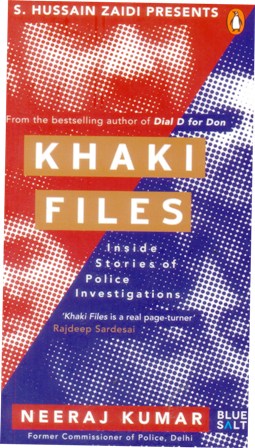
Khaki Files
December 13, 2001: Pak-based terrorists carry out an audacious attack on the Indian Parliament killing eight security personnel and a gardener; all five terrorists are killed in their gun-battle with policemen deployed at the citadel of Indian democracy; the case is solved and all accused arrested within 72 hours. December 16, 2012: a 23-year-old physiotherapist is brutally gang raped in a moving bus in Delhi; the case is cracked within five days despite the lack of initial leads; a head constable loses his life in the line of duty during riots that follow the dastardly crime. In Khaki Files, Neeraj Kumar, a former Delhi Police Commissioner revisits many such high profile police cases of his career -from investigation of one of the biggest lottery frauds in the country to foiled ISI attempt to kill Tarun Tejpal and Anirudh Behal of Tehalka-bringing to light numerous achievements of the country's police force, otherwise largely reviled and ridiculed.
-
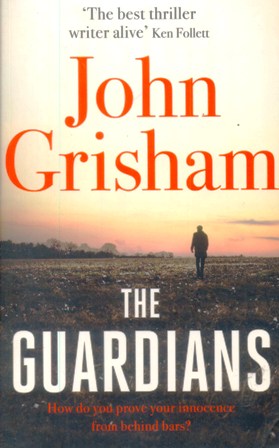
The Guardians
He was framed for murder.Now he needs someone on the outside to save him. For 22 years Quincy Miller has sat on Death Row without friends, family or legal representation. He was accused of killing a Keith Russo, a lawyer in a small Florida town. But there were no witnesses and no motive. Just the fact that Quincy was black in an all-white town and that a blood-splattered torch was found in the boot of his car. A torch he swore was planted. A torch that conveniently disappeared from evidence just before his trial.It made no difference. The police photographs of the torch were enough. In the eyes of the law Quincy is guilty and, no matter how often he protests his innocence, his punishment will be death.Finally, after 22 years, an innocence lawyer and minister, Cullen Post, takes on his case. Post has exonerated eight men in the last ten years. He intends Quincy will become number nine.But there were powerful and ruthless people behind Russo's murder. They prefer that an innocent man goes to his death than one of them. They killed one lawyer 22 years ago, and they'll kill another one without a second thought.
-
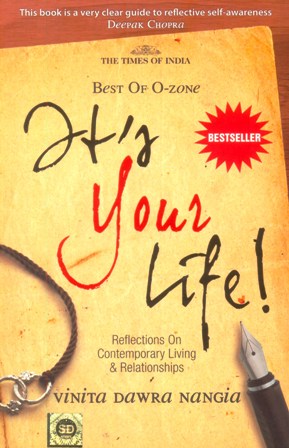
It's Your Life
"It's Your Life" by Vinita Dawra Nangia is a collection of some of the most popular write ups on relationships and contemporary living from the very popular column "O-zone" in "Times Life"; the "Sunday" supplement of "The Times of India". The articles focus on human behavior and relationship issues with simplicity and inspirational wisdom. The inspiration for these come every day experiences, the anecdotes, conversations and discussions we hear around us. These articles will inspire you to take charge of your life and live it as you wish.
-
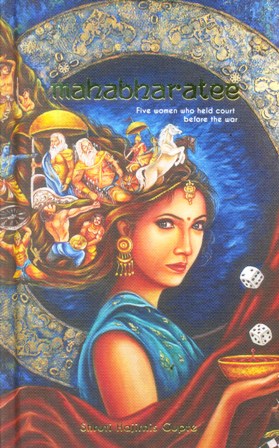
Mahabharatee
For the last time Draupadi throws a glance at her untied tresses; for the last time she looks into the eyes that have become bright with unshed tears. These eyes have been chasing vengeance like a hunter follows a spoor. She raises her index finger and points it towards her mirror image. She shouts – “I will ensure that a war must happen.” While the stars are growing dim in the pre-dawn sky, the matriarch of Kuru dynasty – Satyavati -- arrives on the battlefield of Kurukshetra to hold a discussion with Kunti, Gandhari, Draupadi and Rukmini. She is determined to bring a peaceful settlement to prevent the war in her dynasty. Draupadi, burning in the fire of revenge for last thirteen years desperately wants this war to happen. While the court is divided in two amongst the women of Kuru dynasty, Rukmini joins the discussion. Along with her, she brings a new perspective. Could the discussion between the five women change the course of Mahabharata? "It makes a deeply engaging and interesting read, beyond doubt." — Vinay Sahasrabuddhe, President, Indian Council for Cultural Relations.
-
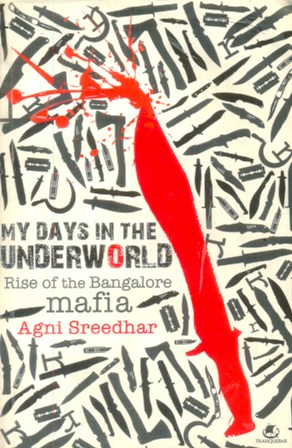
My Days In the Underworld
Agni Sreedhar is an underworld don turned writer turned journalist turned filmmaker. He studied law in Bangalore and was intent on entering the Indian Civil Service when circumstances forced him to turn to crime. Starting from the early 1980s, Sreedhar found himself entrenched in the bitter gang wars that shaped the contours of modern Bangalore. This book is an intimate, first-person account of the two decades he spent in the world of crime. But My Days in the Underworld isn't just a tale of murder and blood. It is a study of a system that runs parallel to the world ordinary people inhabit, a lateral universe, one with its own police force and laws, one where the criminal justice system has all but failed. This is a story of a city as seen through the personal histories of politicians who ruled Karnataka, men like Gundu Rao, Ramakrishna Hegde, Bangarappa and Deve Gowda, as well as those who were responsible for shaping Bangalore's underworld: Dawood Ibrahim, Chhota Rajan, Sharad Shetty, Kotwal Ram Chandra, Jayaraj and Muthappa Rai.
-
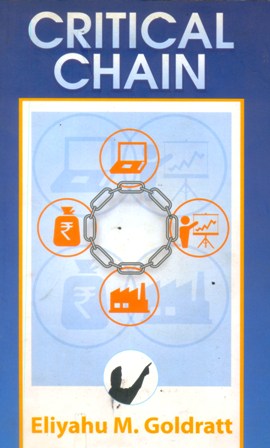
Critical Chain
Critical Chain, a gripping past-packed business novel, does for Project Management what Eli Goldratt's other novels have done for Production and Marketing. Dr. Goldratt's books have transformed the thinking and actions of management throughout the world. If you have read The Goal and Goal II you will want to read Critical Chain because you understand how Eli Goldratt's books can change how you think about business. If you have not read the Goal and Goal II, this book will introduce you to Dr. Goldratt's Thinking Processes, and you will understand why Fortune Magazine calls his - A Guru to Industry and Business Week describes him as a genius. The difference between Goldratt and the new age business authors, I guess comes down to one fundamental element. Goldratt is simply amazing and the others are amazingly simplistic, Assembly