
-
Still Me
Lou Clark returns in the follow-up the all-conquering Me Before You and After You. Likely to be one of 2019's biggest books (Reader's Digest) Immensely readable and enjoyable (Sunday Times) Louisa is a dream character, and this is going to be huge - deservedly so (Daily Mail) A triumph (Heat) The storytelling treads the delicate balance between heartbreak and hope perfectly - with a splash of humour to keep it real (Good Housekeeping) Still one of our fave authors and still a brilliant read! (Look) A joyful story with a pitch-perfect ending (Daily Express) Captivating (OK!) A funny, thoughtful and uplifting conclusion to the trilogy (Sunday Express) Brilliant (Bella) About the Author Jojo Moyes is a novelist and a journalist. Her books include the bestsellers The Girl You Left Behind, The One Plus One, Me Before You and After You and her short-story collection Paris for One and Other Stories. Her novels have been translated into 44 languages and have hit the Number One spot in 12 countries. She is one of the few authors to have had three novels on The New York Times bestseller list at the same time.
-
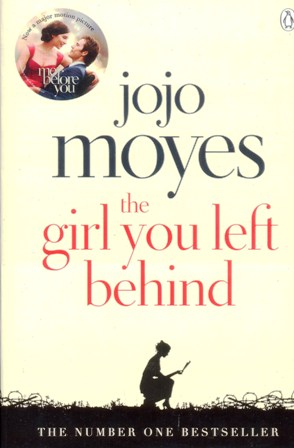
The Girl You Left Behind
Praise for ME BEFORE YOU: "When I finished this novel, I didn't want to review it: I wanted to reread it. . . . Moyes's story provokes tears that are redemptive, the opposite of gratuitous. Some situations, she forces the reader to recognize, really are worth crying over. . . . with Lou and Will she has created an affair to remember." --"New York Times Book Review," Liesl Schillinger "An unlikely love story . . . To be devoured like candy, between tears." --"O, The Oprah Magazine" "'ME BEORE YOU' is one to read. After finishing Jojo Moyes' Me Before You, you grasp why the novel, a word-of-mouth sensation from Britain, has been sold to 28 countries. . . . by turns funny and moving but never predictable." --"USA Today" (****) "Funny, surprising and heartbreaking, populated with characters who are affecting and amusing . . . This is a thought-provoking, thoroughly entertaining novel that captures the complexity of love" --"People Magazine" "READ IT AND WEEP: Heartbreak collides with humor in Jojo Moyes's "Me Before You," about the romance between a quadriplegic and his hired caregiver." --"Good Housekeeping" "Masterful . . . a heartbreaker in the best sense . . . ME BEFORE YOU is achingly hard to read at moments, and yet such a joy." --"New York Daily News" "Jojo Moyes has written the perfect modern love story. You will be astonished at what you feel, and what you hope for when you are forced to face the possibility of your own dreams. It's that good. Read it now." --Adriana Trigiani, "New York Times" bestselling author of "The Shoemaker's Wife" "ME BEFORE YOU is a delicious surprise--funny and hopeful and heartbreaking, the kind of story that will keep you turning pages into the night. Lou Clark and Will Traynor will capture your heart and linger there long after their story has ended." --Eleanor Brown, "New York Times" bestselling author of "The Weird Sisters" "Som Praise for THE LAST LETTER FROM YOUR LOVER: "This story of passion and missed chances is entrancing." --"Parade "(top pick) "With its realistically complicated characters and emotionally complex plot, THE LAST LETTER FROM YOUR LOVER is hopelessly and hopefully romantic." --"Chicago Tribune" "I found myself utterly transfixed. . . . Moyes is a tremendously gifted storyteller, and I'm all admiration." --Paula McLain, "New York Times" bestselling author of "The Paris Wife" "A fabulous, emotional, and evocative book." --Sophie Kinsella, "New York Times" bestselling author of "Confessions of a Shopaholic" "Hits a seam of pure romantic gold. . . . A cliffhanger-strewn tale of heartache in two strikingly different eras [and] a tour de force." --"Kirkus "(starred review) Product Description A hauntingly romantic and utterly irresistible weepy from the author of the international bestsellers Me Before You and After You and the brand-new Still Me. What happened to the girl you left behind? France, 1916. Sophie Lefevre must keep her family safe whilst her adored husband Edouard fights at the front. When she is ordered to serve the German officers who descend on her hotel each evening, her home becomes riven by fierce tensions. And from the moment the new Kommandant sets eyes on Sophie's portrait - painted by Edouard - a dangerous obsession is born, which will lead Sophie to make a dark and terrible decision. Almost a century later, and Sophie's portrait hangs in the home of Liv Halston, a wedding gift from her young husband before he died. A chance encounter reveals the painting's true worth, and its troubled history. A history that is about to resurface and turn Liv's life upside down all over again . . . In The Girl You Left Behind two young women, separated by a century, are united in their determination to fight for what they love most - whatever the cost. Praise for The Girl You Left Behind: 'Moyes is the queen of the classy weepy and this won't disappoint. A masterclass in storytelling that fans of Me Before You will adore' Elle 'Another heart-stoppingly brilliant novel from Jojo Moyes' Closer 'Wonderfully well-written and completely engrossing, with exquisitely drawn characters in a brilliantly plotted narrative. It will make you think long after you turn the final page' Daily Mail
-
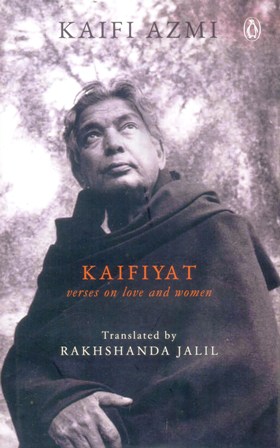
Kaifiyat:Verses On Love And Women
About the Author Kaifi Azmi (Author) KAIFI AZMI (1919-2002) was one of the most prominent Urdu poets and lyricists of the twentieth century. An ardent crusader for justice as well as a writer of tender lyrics and rousing anthems, he was the quintessential activist-poet. His three major poetry collections are entitled Jhankar (1943), Akhir-e-Shab (1947) and Awara Sajde (1973). Rakhshanda Jalil (Translator) RAKHSHANDA JALIL is a writer, translator and literary historian. Her work on the Progressive Writers' Movement is considered seminal; she has written A Rebel and Her Cause: The Life and Work of Dr Rashid Jahan, Shahryar: A Life in Poetry, among others. She runs Hindustani Awaaz, devoted to the popularization of Hindi-Urdu language and literary culture.
-
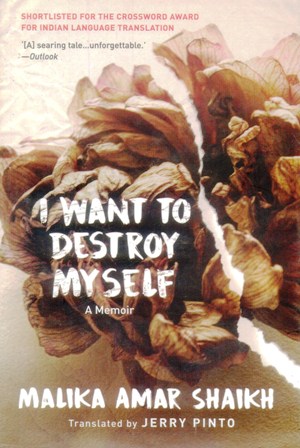
I Want to Destroy Myself: A Memoir
‘The issue Malika raises through her book is how even ‘progressive’ husbands treat their wife’s badly. The patriarchal attitude becomes visible within the four walls of the house. For social and gender equality patriarchal values need to go. The book is a must read for the women and Dalit activists, students, researchers and those who believe in the gender equality’. - Free Press Journal ‘This translation from Marathi by Jerry Pinto is tender and unobtrusive’. - Outlook ‘Malika Amar Shaikh’s forthright self-portrait—and Jerry Pinto’s translation that opens it to non-Marathi readers—is a disturbing yet luminous read’. - Open Magazine ‘Malika Amar Shaikh looks back at a life closely entwined with the Left and the Dalit movements, the souring of her marriage with Marathi poet Namdeo Dhasal and why she put the personal before the political.’—The Indian Express ‘I Want to Destroy Myself is a raw portrait of scattered dreams, love defeated, self-respect crushed, and a story of the valour to survive and live a life of meaning. Malika does keep her poetry alive.’—Kitaab.org ‘I Want To Destroy Myself’ is the angry, searing account of the Dalit Panther poet’s wife’s life with him’.—Scroll.in. About the Author Malika Amar Shaikh is a writer. Other than her autobiography, Mala Uddhvasta Vhaychay, her published work includes books of poetry: Valucha Priyakar (A Lover Made of Sand), Mahanagar (Metropolis), Deharutu (Seasons of the Body) and Manuspanacha Bhinga Badalyavar (When the Lens of Being Human Changes); works of fiction: Ek Hota Undir (There Was Once a Mouse), Koham Koham? (Who Am I?), Handle with Care and Jhadpanachi Ghosht (The Story of a Tree) and a biography of her father, Shahir Amar Shaikh, Sura Eka Vadalacha (The Song of a Storm). Jerry Pinto (translator) is an acclaimed poet, novelist and translator. His published work includes the award-winning novel Em and the Big Hoom and translations from the Marathi of Daya Pawar’s Baluta, Sachin Kundalkar’s Cobalt Blue and Vandana Mishra’s I, the Salt Doll.
-
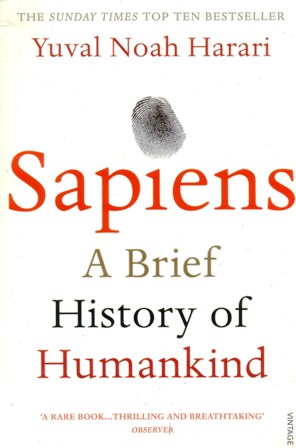
Sapiens: A Brief History Of Humankind
"I would recommend Sapiens to anyone who’s interested in the history and future of our species" (Bill Gates) "Interesting and provocative… It gives you a sense of how briefly we’ve been on this Earth" (Barack Obama) "Jaw dropping from the first word to the last… It may be the best book I’ve ever read" (Chris Evans) "Tackles the biggest questions of history and the modern world… Written in unforgettably vivid language" (Jared Diamond) "Startling... It changes the way you look at the world" (Simon Mayo) "Sapiens is a starburst of a book, as enjoyable as it is stimulating" (Sunday Express) "One of the best books I’ve read recently… Gives an excellent overview of how our species has developed" (Lily Cole) "Sweeps the cobwebs out of your brain… Radiates power and clarity, making the world strange and new" (Sunday Times)
-
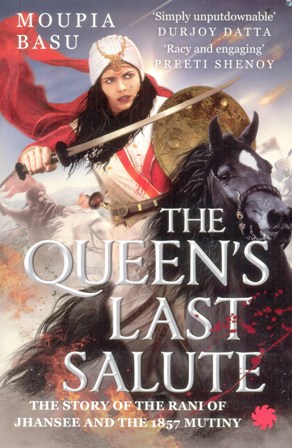
The Queen's Last Salute
Moupia Basu has a master's degree in English literature from St Stephen's College, Delhi University. She grew up in the Delhi of the seventies and eighties. She has worked as a journalist with Times of India, Economic Times, Indian Express and Business Today and has written on a variety of topics including business, education and travel. Her debut book, Khoka, was published in 2015. She lives in Pune.
-
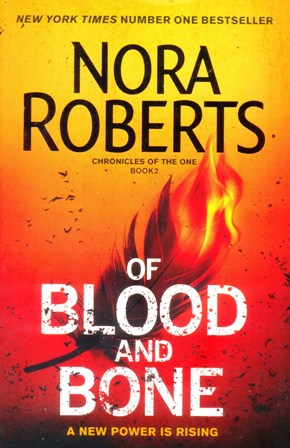
Of Blood And Bone
eview Though it's the middle book in a planned trilogy, this can be read on its own and will appeal to fans of fast-paced dystopian tales with a strong heroine] (Publishers Weekly) Book Description The gripping sequel to New York Times number one bestseller Year One - an epic story of love, war, family and magic.]
-
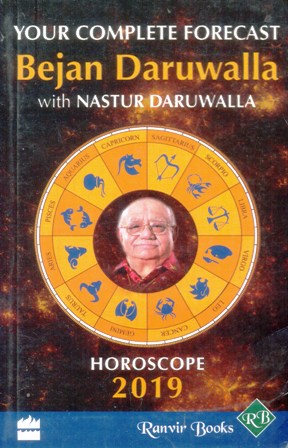
Your Complete Forecast 2019 Horoscope
Bejan Daruwalla is India's best-known astrologer whose forecasts are published in a number of magazines and newspapers.
-

You Begin Where I End
Product Description Is it possible to love two people at the same time? Nafisa is dealing with beers, periods, heartbreak, and dating apps, when she meets her new uniquely average boyfriend. But is he the love of her life? Before Nafisa can figure that out, her life is turned upside down. Her mother Tamanna dies in an accident. In trying to come to terms with her loss, she finds solace in the company of a charming painter. Her life takes a retro turn, with diaries, handwritten letters, and music trying to heal her. Tamanna is busy simply existing and complaining, when a gorgeous poet takes her on a whirlwind philosophical journey, teaching her to appreciate art, nature, human existence, and love. But is he the love of her life? Before Tamanna can figure that out, her marriage is arranged with an extraordinarily ordinary guy. Amidst arranged marriages, honour killings, letters of blood, and melting ice-golas, Tamanna shall discover her brand of love. You Begin Where I End spins two unconventional love stories, set two decades apart – 1991 and 2015 – trying to find an answer to the eternal dilemma of darlings – What is love? About the Author Sarang is a software engineer by profession, but identifies himself as a writer. He has previously published two anthologies – Pendulum and Void. When not writing, he is either busy reading fiction, exploring new music, or playing with his feline daughters. He writes poems and short write-ups on Instagram, where you can get in touch with him
-

Sometimes It Happens
After more than twenty years of working in a highly successful and popular family business in the interiors industry, Karan decided it was time to get into writing fiction books – an idea that came up when he saw his son having so much fun reading. It rekindled a latent passion for writing that he had developed during his college days. Karan is a commerce graduate and a battle-hardened businessman. His other passions include both playing and watching cricket and football, as well as being an avid traveller.
-
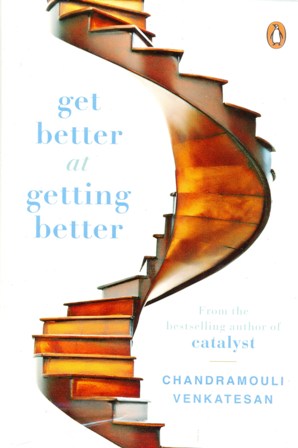
Get Better At Getting Better
Review Lucid, practical and logical, this book is a great guide on getting better, every day (Bharat Puri) I encourage readers to not just read this book but also internalize the concept and apply it consciously. Get Better at Getting Better has the potential to change you for good-and make you the best that you can be (Anand Kripalu) I have heard of Kaizen and continuous improvement for machines and processes and always wondered why there was no Kaizen process for human beings. This book is the answer to that (Harsh Mariwala) Everyone wants to get ahead; a few want to get better. The ones who get better always get ahead. Mouli's book tells us how all of us can get better (Shiv Shivakumar) You don't grow in an organization by just delivering results. You need to continuously get better. Mouli's book makes you realize that and gives you the strategies to get better (Piyush Pandey) About the Author Chandramouli Venkatesan is a corporate veteran with over twenty-eight years of experience in the industry. He has worked with Asian Paints, Cadbury/Mondelez, Mirc Electronics/Onida and Pidilite. He has served in various senior capacities, including as CEO and managing director. While the bulk of his work life has been in business and P&L leadership roles, there was a three-year period when he did a cross-functional stint as HR head for Cadbury India which further developed his understanding of what makes people successful. Chandramouli is a keen golfer and sports enthusiast, and believes in holding his life in balance. This, coupled with his sense of values and spirituality, has led him to believe that every person must impact society positively. His personal mission is to help people succeed and he has conducted numerous speaking sessions in many organizations and mentored and guided several people to be successful in their careers. His first book, Catalyst, a bestseller, was a part of his mission to help people succeed.
-
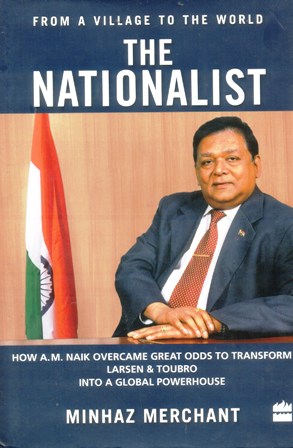
The Nationalist
I read it very sincerely and the life story of Mr. AM Naik is really motivating story for engineers. --By A Customer on 25 November 2017 Product Description This is the story of an extraordinary business leader, Anil Naik, and the company, Larsen & Toubro (L&T), he has served for 53 years and led for the last 18. Long coveted by the Ambanis and Birlas, L&T has an annual turnover of Rs 1,20,000 crore and a market capitalisation of more than Rs 1,60,000 crore. It is involved in several critical national projects: India s first nuclear-powered submarine; strategic weapon and missile systems; space exploration including maiden missions to the moon and Mars; global infrastructure; airports; metro rail systems; and nearly all of India s nuclear power plants. L&T s Hazira manufacturing complex, Vadodara s Knowledge City and the Kattupalli shipyard have become symbols of world-class Indian engineering and technology. Author Minhaz Merchant spoke to Naik over several months to construct a compelling narrative of a remarkable company and its chairman. What emerges is a portrait of a man whose work and life have been bedrocked on a deeply felt sense of nationalism, synonymous with helping to build a strong and self-reliant India. From a south Gujarat village to the chairmanship of L&T, Anil Naik s journey has been one of grit, determination, entrepreneurial leadership, 16-hour workdays and a unique management style. What emerges is a visionary leader who ringfenced L&T from corporate takeovers by creating an innovative employee welfare foundation and transformed L&T into a global technology and engineering powerhouse. Naik also emerges as a devoted family man and a generous philanthropist who has donated most of his personal income to charities through family trusts focused on healthcare, education and community service. Naik s father, Manibhai, a teacher who spent his life serving the rural poor, was his role model who taught him to be fearless and honest with the motto: If you are in the right, you have nothing to fear. This is the story of a man who surmounted great odds to reach the pinnacle of success, says Merchant. It demonstrates more than anything else that honesty the quality Naik prizes most pays the greatest dividend of all in the end: the respect of your peers, the loyalty of your colleagues, and the affection of your family.
-
The Guilty Dead
The Guilty Dead is a cut above. The stakes are higher, and nothing is as it seems. This is Tracy at her gritty, elegant best. Do not miss it. (JT Ellison, New York Times bestselling author of Lie to Me) In this high-stakes thriller, Tracy demonstrates once again her masterful ability to juggle the dynamics of a tight, fast-paced plot, the riveting details of a fine police procedure, and the compelling emotional complexities of human relationships. There's so much to savor in the writing itself, but I'm sure readers will consume this offering in one quick binge. Another winner in one of the most satisfying series on the market today (William Kent Krueger, Edgar Award-winning author of Ordinary Grace) Snappy dialogue and supercharged storytelling, with thrills and spills aplenty (Daily Mail) About the Author P. J. Tracy was the pseudonym for the mother-and-daughter writing team of P. J. and Traci Lambrecht. Together P. J. and Traci were authors of the bestselling thrillers Want to Play? (a Richard and Judy Book Club pick), Live Bait, Dead Run, Snow Blind, Play to Kill, Two Evils, Cold Kill and Nothing Stays Buried. P. J. passed away in 2016, but Traci is continuing the series with The Guilty Dead.
-
Skin Deep.
What takes a woman from an island childhood in Ireland to murder and ruin in a grotty flat in Nice? - another dark twisted story from No 1 bestseller Liz Nugent. (From the Publisher's Description) Monumentally good. Liz Nugent is a beautiful writer and among the very best storytellers in the world (Donal Ryan) A twisted thriller, reminiscent of Patricia Highsmith. A scarred woman brings chaos to those around her, but Nemesis is coming (Ian Rankin Guardian Books of the Year) The finest psychological thriller writer currently at work - no one gets under the skin of monstrous characters like she does (Tammy Cohen) I loved, loved, loved Skin Deep - the compassion of it, the beauty of the language, how glamour and horror intersect, how the tension twists tighter and tighter and is brilliantly done (Marian Keyes) A tour de force ... a genuinely memorable, at times terrifying central character ... will appeal to readers who enjoy an exciting, fast-paced journey of psychological extremes, which delivers a shocking final twist (Crime Club, Killer Women Book of the Month) As one woman's singular story unspools with many an unexpected shock, Nugent skewers her targets with skill. Sly humour and dazzling originality deliver a gutsy feminist message. (The Times) Dazzling ... chilling, mesmerising and, ultimately, devastating. Pure storytelling genius (Mark Edwards) Wow! I am lost in admiration - Liz Nugent's storytelling is a wonderful feat of imagination, totally gripping, with a fascinating character at its heart (Sabine Durrant) A triumph, from first page to last! (Sarah Hilary) Product Description Irish Independent Crime Fiction Book of the Year Winner 2018 The deliciously sinister new novel from the No 1 bestselling author of Richard and Judy Book Club pick, Lying in Wait' 'I could probably have been an actress. It is not difficult to pretend to be somebody else. Isn't that what I've been doing for most of my life?' Cordelia Russell has been living on the French Riviera for twenty-five years, passing herself off as an English socialite. But her luck, and the kindness of strangers, have run out. The arrival of a visitor from her distant past shocks Cordelia. She reacts violently to the intrusion and flees her flat to spend a drunken night at a glittering party. As dawn breaks she stumbles home through the back streets. Even before she opens her door she can hear the flies buzzing. She did not expect the corpse inside to start decomposing quite so quickly . . . RTÉ Radio 1's Ryan Tubridy Show Listeners' Choice Award Winner 2018 'Absorbing, beautifully written' The Times, Crime Books of the Year 2018 'A twisted thriller, reminiscent of Patricia Highsmith. A scarred woman brings chaos to those around her, but Nemesis is coming' Ian Rankin, Guardian Books of the Year 'Unspools with many an unexpected shock ... sly humour and dazzling originality' The Times & Sunday Times Crime Club 'Bloody brilliant!' Denise Mina 'An extraordinary writer - Liz Nugent maps the human mind as a cartographer charts new worlds: She's boundlessly curious and totally unflinching' A.J. Finn 'The most gripping book I read this year ... brilliantly written ... deeply disturbing' Claire Allan, Irish Independent Books of 2018 'A tour de force ... a genuinely memorable, at times terrifying central character ... will appeal to readers who enjoy an exciting, fast-paced journey of psychological extremes, which delivers a shocking final twist' Crime Club, Killer Women Book of the Month 'Utterly compelling ... a storyteller at the height of her powers' RTÉ Guide, Books of the Year 'While the likes of Paula (The Girl On The Train) Hawkins have been getting all the plaudits in the ill-named domestic suspense genre, Liz Nugent has been quietly beavering away, producing dark, mythical thrillers of Shakespearean proportions. There are unreliable heroines, and then there's Delia' The Pool 'It took me two sittings to gobble it up - a page turner. You'll just snap it up and you'll love it. A cracking read' Ryan Tubridy, RTÉ 'The finest psychological thriller writer currently at work - no one gets under the skin of monstrous characters like she does' Tammy Cohen 'A wonderful feat of imagination, totally gripping, with a fascinating character at its heart' Sabine Durrant 'Dark, brutal and brilliant' Colette McBeth 'A triumph, from first page to last!' Sarah Hilary 'Spellbinding' Declan Hughes, Irish Times, Best Crime Fiction of 2018 'Monumentally good. Liz Nugent is a beautiful writer and among the very best storytellers in the world' Donal Ryan 'I loved, loved, loved Skin Deep - the compassion of it, the beauty of the language, how glamour and horror intersect, how the tension twists tighter and tighter and is brilliantly done' Marian Keyes 'Beautifully written and completely gripping' Sunday Mirror 'Brilliant' Irish Independent, Best Books of 2018 'Dazzling ... chilling, mesmerising and, ultimately, devastating. Pure storytelling genius' Mark Edwards 'Perfect summer read for those who like their escapism on the darker side' Ian Rankin 'Spectacular' Declan Burke, Irish Times, Best Crime Fiction of 2018 'Her darkest book yet - a compelling one-sitting read' Sinéad Crowley 'Utterly gripping, fast paced, and featuring my favourite sociopathic female character since Lady Macbeth' Louise O'Neill 'Incredibly dark, twisting and utterly mesmerising - you will not be able to put this down' Sinéad Moriarty 'Pitch dark and thrillingly original' Jane Casey 'Skin Deep will keep you completely gripped' Sunday People 'As one woman's singular story unspools with many an
-
Socha Bhi Na Tha
Sriman works for a leading credit cards issuing company in a senior leadership position. He has primarily worked in the financial services industry throughout his long career at HSBC, GE Capital and Standard Chartered Bank. He relishes writing with a spiritual tinge and believes that the joy in life is in being purposeful. He loves playing tennis, reading and listening to philosophy, and enjoys spending time with his seven-year-old son in making short/funny videos of him. He lives in the US with his wife Shilpa and his son, Siddharth.
-
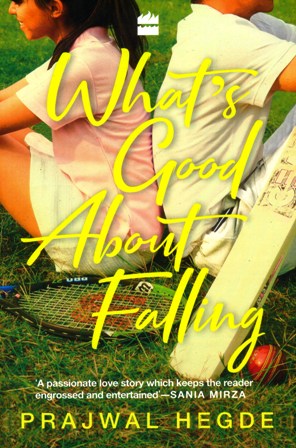
What's Good About Falling
Prajwal Hegde has been working with The Times of India since 2005. She is TOI's Tennis Editor. She has also covered a number of other sports including athletics and cricket. She played tennis at the state and national levels. Prajwal lives in Bengaluru with her husband Dr Sanjay Hegde.
-
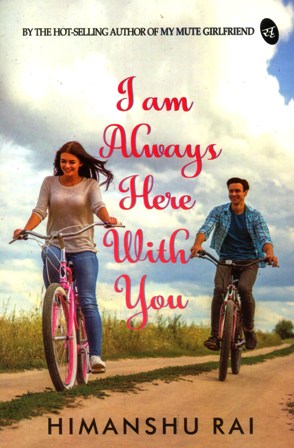
I Am Always Here With You
Kartik fell in love with Ashima the very first time he saw her. She was everything he had ever imagined in his dream girl – his Angel. As their friendship bloomed into deep love, culminating into marriage, he became her Teddy, her confidant and an eternal support. But in trying to be with her, Kartik made a choice that broke his father's heart and hopes. As Kartik and Ashima gear up to step into the next phase of their relationship, life seems like an overload of joy and love. He is confident his love for Ashima will win over all odds, even his father. Little did he know that things were going to change drastically, forever. Why does Ashima marry someone else? Why does Kartik accept it silently? And why is life so unpredictable? This is a story of deep love that knows no bounds, relationships that break all barriers, and a promise – I am Always Here with You. About the Author Himanshu is a telecom professional with a passion for storytelling. His previous three novels were highly appreciated. He loves writing and tries to bring real locations and themes into his stories, enabling the readers to visualize what he writes. His book My Mute Girlfriend was based on his life-story and was one of the best romance titles of the year 2018. He lives in Noida with his wife and son.
-
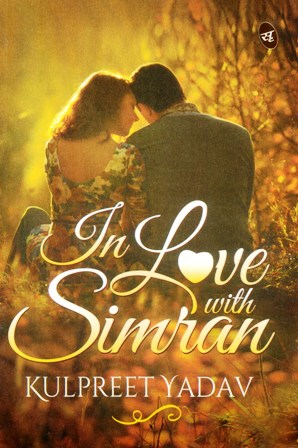
In Love With Simran
Sanjana's best friend at college is murdered. She was in love with a business tycoon named Nik Sethi, and Sanjana is certain that he killed her. In an effort to find proof, she decides to get close to him. Good looking and rich, Nik falls in love with Sanjana instantly, but a month later, when he accidently discovers her real agenda, he throws her out of his life. Determined to nail him, Sanjana's desperation exceeds all limits when she realizes that she too, like her friend, has fallen in love with a killer. After she escapes an attack one night, Sanjana quits college and goes into hiding. Now her only ambition is to punish the killer and her only weapon is her body. In a last, desperate attempt, she uses herself as bait and pursues her best plan. There are only two options: she becomes a victim or she becomes a victor. Through the story of Sanjana and Nik, In Love With Simran explores the boundaries of the basic instincts of the young: love, sex, trust, and survival.
-
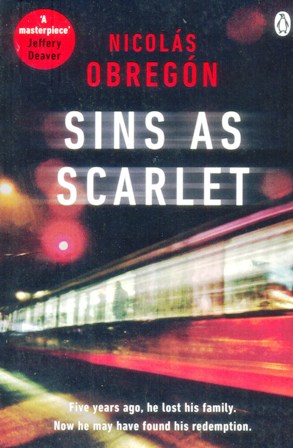
Sins As Scarlet
Harrowing and gripping. An astute police procedural . . . Switching between LA, Mexico and Tokyo both Iwata's present and past are cleverly interwoven in a truly heart-rending climax (Daily Express) Fresh and convincing . . . the dialogue is worthy of the great chronicler of LA's dark side, Raymond Chandler. But really, Obregon's writing has a unique flavour all of its own, wherever his books are set (Jake Kerridge Sunday Express) Sins as Scarlet is a searing LA crime story, as poetic as it is brutal, as tender as it is disturbing (Tim Weaver) Thanks to the excellent Iwata, you get a gripping mystery with a real conscience (Sunday Sport) In the heady tradition of Raymond Chandler and Michael Connelly, Sins as Scarlet lays bare the bruised heart and broken soul of Los Angeles. Extraordinary stuff: a diabolically clever police procedural, a wrenching character study, and a merciless chronicle of a city in decay. I'm awestruck. (A. J. Finn, author of international bestseller THE WOMAN IN THE WINDOW) A dark, brutal ride through the underbelly of LA (ANTHONY HOROWITZ) Masterpiece - that's the only way to describe Sins as Scarlet. Obregón's brilliant novel is, at once, a classic noir, a psychological thriller and a riveting examination-sometimes dark, sometime moving to the point of tears--of life in a less-than-angelic Los Angeles (JEFFERY DEAVER) Evocative, perceptive writing (Sunday Time Crime Club) This bleak, richly descriptive and haunting thriller walks of the wild side of Los Angeles (Peterborough Telegraph) A brace of cutting-edge themes are threaded into the abrasive narrative . . . It is a combustible mix, but as in the earlier Blue Light Yokohama, the author has the full measure of his difficult material. With his vividly evoked Mexican and LA settings [he] delivers a pacey, page-turning thriller, but the underlying seriousness gives real texture. Iwata is a richly drawn, conflicted hero, and this is another savage journey into the dark heart of America (Barry Forshaw, Crime Time) About the Author British born of a Spanish father and a French mother, Nicolás Obregón grew up between London and Madrid. As a travel writer, Nicolás has had an extensive experience of Japan, but the beginning of his fascination with the country came from watching Japanese cartoons as a young boy. Nicolás Obregón is a graduate of the acclaimed Birkbeck Creative Writing Masters course and a former bookseller for Waterstones. His first novel was Blue Light Yokohama. He lives in Los Angeles
-
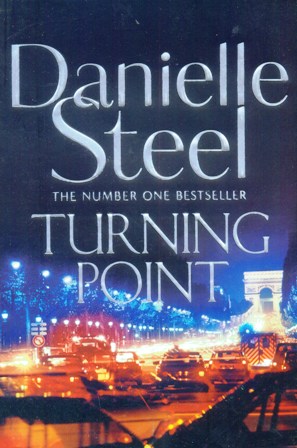
Turning Point
From the Author Danielle Steel has been hailed as one of the world's most popular authors, with nearly a billion copies of her novels sold. Her international bestsellers including The Duchess, The Right Time and Fairytale. She is also the author of His Bright Light, the story of her son Nick Traina's life and death; A Gift of Hope, a memoir of her work with the homeless; and the children's books Pretty Minnie in Paris and Pretty Minnie in Hollywood. Danielle divides her time between Paris and her home in northern California. From the Inside Flap In Danielle Steel’s powerful novel, four San Francisco trauma doctors – the best and brightest in their field – confront exciting and exacting new challenges, both personally and professionally, when given a rare opportunity. Bill Browning heads the trauma unit at San Francisco’s busiest emergency room. With his ex-wife and daughters in London, he immerses himself in his work and lives for the little time he can spend with his children. A rising star at her teaching hospital, Stephanie Lawrence has two young sons, a frustrated stay-at-home husband, and not enough time for any of them. Harvard-educated Wendy Jones is a dedicated trauma doctor, trapped in a dead-end relationship with a married cardiac surgeon. And Tom Wylie’s popularity with women rivals the superb medical skills he employs at his medical centre, but he refuses to let anyone get too close, determined to remain unattached forever. These exceptional doctors are chosen for an honour and a unique project: to work with their counterparts in Paris in a mass-casualty training programme. As professionals they will gain invaluable knowledge, but as ordinary men and women they will find that the City of Light opens up incredible new possibilities, exhilarating, enticing and frightening. When an unspeakable act of mass violence galvanizes them into action, their temporary life in Paris becomes a stark turning point: a time to make harder choices than they have ever faced before – with consequences that will last a lifetime. www.daniellesteel.com Pure Heart. Pure Steel. www.daniellesteel.com www.facebook.com/DanielleSteelOfficial @daniellesteel
-
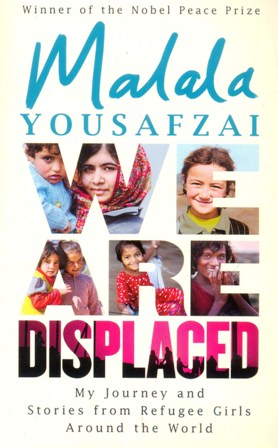
We Are Displaced
Malala Yousafzai presents true stories of the refugee experience interwoven with her own story of her displacement in this incredibly moving follow up to her internationally bestselling memoir