
-
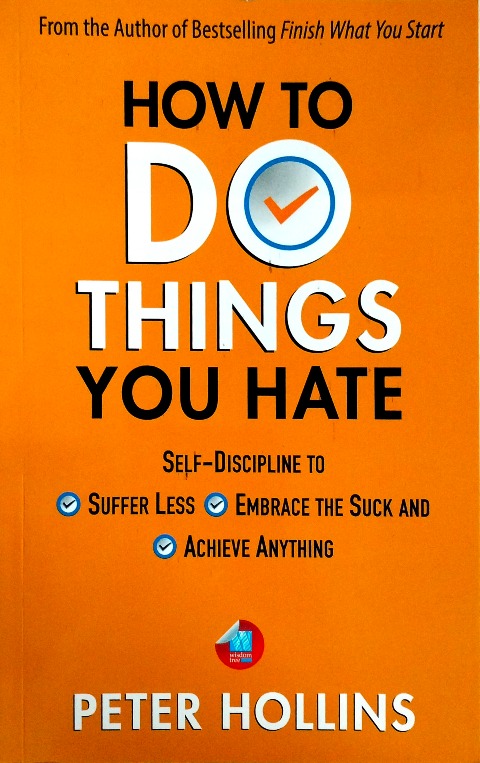
How To Do Things You Hate
Doing things you hate is a skill. And it is a skill that is always in high demand. This amazingly practical book will help you with: Diagnosing and understanding the exact type of laziness problem you have; The value of discomfort and how to love it with daily exercises; The incredibly valuable 90-second rule of emotional volatility and self-mastery; How you should approach your daily tasks like a pro athlete with daily routines and activation modes.You won’t just be more productive, but you will start to notice that your to-do list is always DONE.
-

Don't Let Everything Affect You
When Everything Feels Like Too Much A delayed message or a passing comment can stay with you far longer than it should, replaying in your mind long after the moment has passed. You find yourself revisiting conversations, wondering whether you said the wrong thing, and carrying emotions that linger well beyond the event itself. If this feels familiar, you are not alone. Many thoughtful and emotionally aware people struggle with overthinking, emotional overwhelm, and the quiet exhaustion of constantly monitoring themselves and others. In Don’t Let Everything Affect You, you will learn why your mind spirals, why emotions sometimes feel larger than the moment itself, and how to regain steadiness without shutting down your sensitivity. Drawing on psychology research and practical insight, this book will help you: understand why overthinking happens; stop absorbing other people’s emotions; quiet the inner critic, eliminate self-sabotage, and rebuild self-trust; set healthier emotional boundaries; respond to life without getting bogged down You don’t have to stop caring to feel calm. You just need to learn how to care without carrying everything.
-

How to Extract Info, Secrets, and Truth
Learn to quickly read people and draw conclusions from seemingly innocent and easy questions. Some people are forthcoming, and others are not so much. Either they are guarded, or they are deliberately hiding something. Well, whatever the case, this book is how you crack them and learn exactly what they aren’t saying. Tips from FBI interrogators, psychologists, and famous lawyers. How to Extract Info, Secrets, and Truth turns you into an expert reader of intentions, behavior, thoughts, and emotions. The tips in this book are used by professionals to extract valuable knowledge worth millions of dollars.You’ll read about body language, speed reading, thin slicing, and every other technique that has been scientifically proven.The goal of this book is to arm you with tools to uniquely understand and peel back the layers on people before they even know it. No one will be a puzzle to you anymore. How to subtly direct a conversation to exactly what you want. Exactly what to look and listen for. Patrick King is an internationally bestselling author and social skills coach. His writing draws of a variety of sources, from scientific research, academic experience, coaching, and real life experience. Protect yourself from those trying to probe you. The value of knowing how to extract information is in understanding human nature. That is the true purpose of this book. Once you know how people think, and what patterns tend to form, you’ll be armed with a powerful tool for the rest of your life.
-
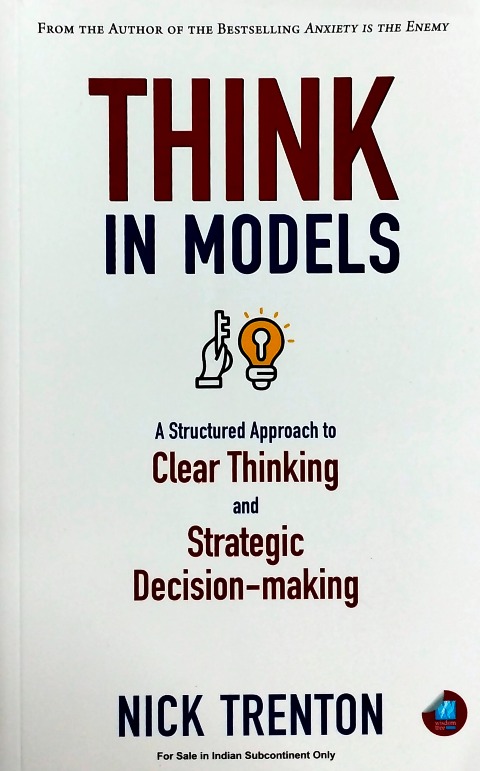
Think in Models
Learn mental models for error-proof thinking, analysis, and decisions. The world is not as it seems. It requires a bit more analysis to see reality, and applying mental models is the best way to start. A thinking toolkit for nearly all problems and complexities in life. Think in Models is a collection of the world’s (and history’s) greatest mental models that are exclusively focused on getting the most insight from the least amount of information. You’ll learn over 20 of the most helpful and widely-applicable mental models and above all else, learn to think like a genius. A wide variety of examples, explanations, and step-by-step guidelines are also included. Nick Trenton grew up in rural Illinois and is quite literally a farm boy. His best friend growing up was his trusty companion Leonard the dachshund. RIP Leonard. Eventually, he made it off the farm and obtained a BS in Economics, followed by an MA in Behavioral Psychology. Knowing how to think is always better than having more information. •The simple way to know whether you are truly open-minded or not•Why you must always ask yourself a few questions in Latin•What your gut feeling is really telling you•How to analyze systems in your everyday life•How Sherlock Holmes thinks and solves crimes Don’t just wing it. Emulate the best and reach your goals. Thinking in models isn’t just important for large decisions or work issues. You can use all of these skills in daily life to live better, happier, and more stress-free. Think in models and think like history’s most accomplished thinkers.
-

Conquer Your Negative Thoughts
Don’t let negative thoughts steal your happiness. . . learn to take charge of your thoughts and rewire your brain. Thoughts that we allow to circle again and again in our minds build ruts or roads in the brain, making those thoughts more likely to dominate and control our lives. But we aren’t doomed to feel down when life doesn’t go our way. In Conquer Your Negative Thoughts, psychiatrist and clinical neuroscientist Dr. Daniel G. Amen applies his knowledge of how the mind works to help you take back control of your thoughts, consistently generate positive feelings, and master your emotions no matter your age, income, or situation. By retraining your brain to focus on happiness and purpose, you’ll feel healthier, calmer, and more resilient and be fully prepared to face life’s ups and downs. Conquer Your Negative Thoughts offers readers: A great resource for those dealing with anxiety and depression; key insights from an expert in his field; tools to change your mental habits based on science; real-life case studies; bible verses to help conquer negative thoughts Empower yourself to change your mind’s habits and improve your mental health, for good.
-
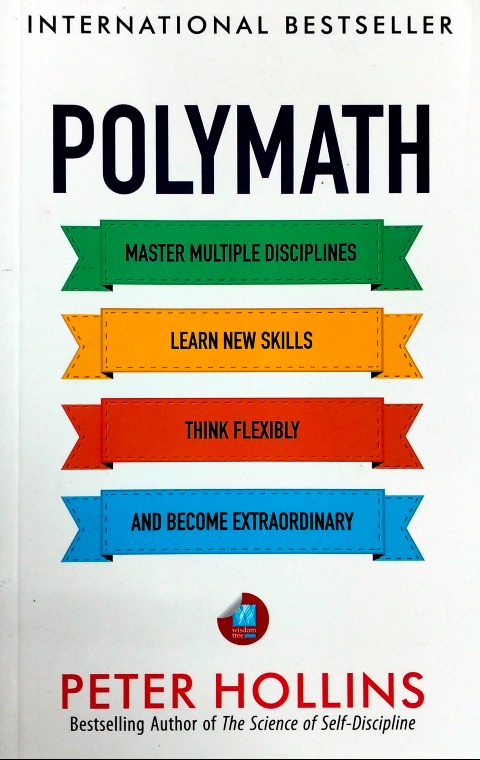
Polymath
Expertise pays; polymathy pays exponentially. Build a world-class skillset that will make you unique and irreplaceable. Polymath: a person of wide knowledge and learning. The art of becoming a polymath is really about maximizing your opportunities in life. Don’t be the person with the hammer - be the person with an entire woodshop at their disposal. Learn to think outside the box and adopt a flexible mindset. Become multi-faceted. Polymath shows you how to be a singular entity, like Benjamin Franklin, Leonardo da Vinci, and Thomas Young. No, you won’t achieve what they achieved, but you will understand the skills, habits, and techniques to master multiple realms of knowledge and skills. Almost every famous genius you know is a polymath. This book will trace their journeys and change the way you look at learning. Jack of all trades, master of none? No such thing. A complete learning framework, from novice to expert, in any skill or discipline. Peter Hollins has studied psychology and peak human performance for over a dozen years and is a bestselling author. He has worked with a multitude of individuals to unlock their potential and path towards success. His writing draws on his academic, coaching, and research experience. Become a modern day Renaissance man/woman; broaden your horizons. Learn why you should become a pi-shaped polymath.; the primary traits you need to foster genius.; a 10-step process of learning a new topic or skill from A to Z.; how to choose and select your unique set of skills.; how to create your “second brain” on paper.; examples from every era of mankind. Learn new perspectives, understand people better, and gain confidence to break your comfort zone. Polymathy is the most important skill for your career, hands down. It makes you one-of-a-kind. Become the most unique person you know. Create new routines and habits. Upgrade your life circumstances and see how mentally tough flexible thinking makes you.
-
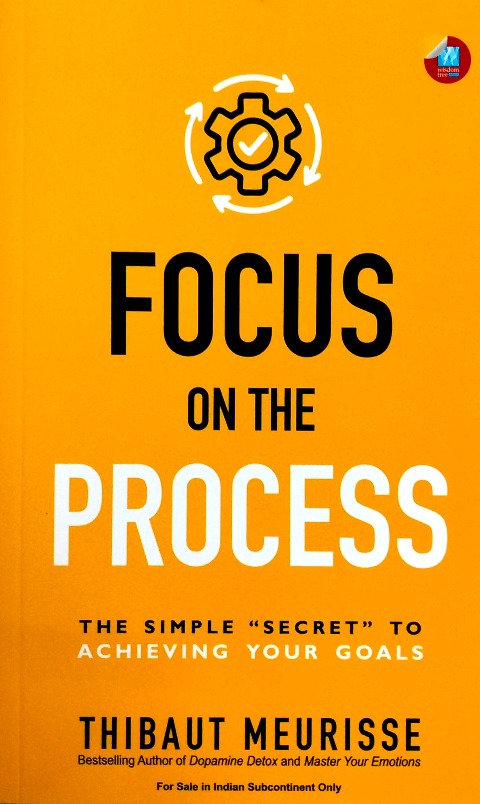
Focus on The Process
The outcome is what happens when you follow the right process. Until you understand that at a deep enough level, nothing will stick. Not your diet. Not your business. And not the habit you've restarted four times this year. Focus on the Process will show you: Why most people quit right before their breakthrough and how to push through the plateau phase when nothing seems to work The difference between process goals and result goals, and why top performers lead with process How to identify the right process and why it makes everything else easier Why starting small is not a weakness, but a sound strategy. Why self-compassion often matters more than discipline or motivation. Focus on the Process gives you a framework for showing up until the results you want become the results you have.
-

Dopamine Detox
Your brain is being hijacked. And you feel it every day. You sit down to do the one thing that actually matters. But within minutes, you're somewhere else entirely. You’re scrolling your newsfeed, checking messages, or switching to a less important task. It’s not because you're lazy. It’s because your brain has been rewired to crave instant stimulation. This isn't a willpower problem. It's a stimulation problem. Bestselling author Thibaut Meurisse explains why your reward system has been hijacked and gives you a simple method to take back control in 48 hours or less. In Dopamine Detox,you’ll discover: What dopamine is and why it’s working against you How overstimulation creates an invisible barrier between you and your most important work The 4 tricks your mind plays to distract you A 3-step method to lower stimulation and get back to work Simple habits to prevent relapse and stay focused long term You don't need more discipline. You need less stimulation. This book shows you how to get there.
-

Live While You're Alive
his time he turns his focus on STRESS, the silent killer. He offers his unique take on how to tackle stress in life, be it at work, at home, in relationships or even on the road!
-
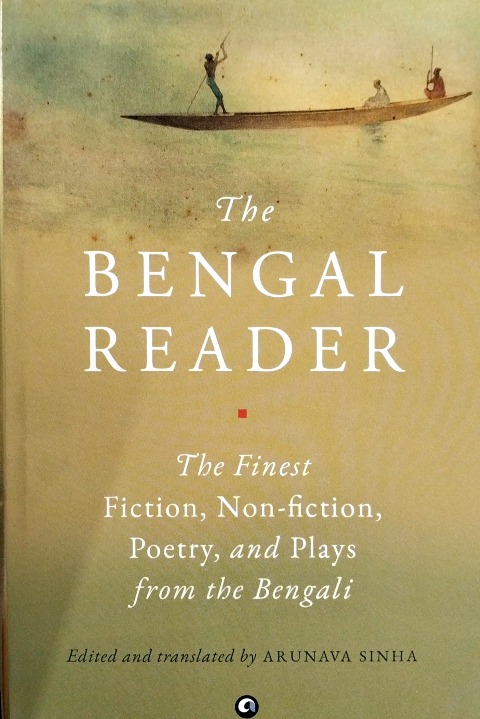
The Bengal Reader
THE BENGAL READER: The Finest Fiction, Non-Fiction, Poetry, and Plays from the Bengali The Bengal Reader is the most expansive anthology of Bengali writing in translation yet published in one volume. Ranging from the nineteenth century to the present, it is edited and translated by one of the most prolific translators of our times, Arunava Sinha. It opens up the wealth of Bengali writing to a wide audience, both Bengali and non-Bengali. The book is arranged along the axis of time. The first section contains the works of the ‘argumentative Bengali’. These include the likes of Rammohun Roy’s argument against sati, Michael Madhusudan Dutt’s The Slaying of Meghnad, Lalon Fokir’s verse, and Bankim Chandra Chattopadhyay’s satire. The second section tips its hat to Rabindranath Tagore, then goes on to reveal an extraordinary line-up of writers who also shaped and expanded the perspectives of their readers and Indian society in general. Here, you will read an excerpt from Sarat Chandra Chattopadhyay’s Devdas, essays by scientists like Jagadish Chandra Bose and Meghnad Saha, and Sukumar Ray’s humour, among others. The third section presents a slew of independent voices. It includes seminal works by luminaries like Bibhutibhushan Bandyopadhyay, Manik Bandyopadhyay, Jibanananda Das, and Sukanta Bhattacharya. Sinha attributes the boom of literary genius in this era to a ‘happy concatenation’, where magazines and cheap, widely available books ignited the imagination of both readers and writers. Next comes the era of the ‘revolutionary fires’, work by those who questioned and resisted the status quo— Satyajit Ray, Ritwik Ghatak, Kanu Sanyal, and Ashapurna Devi. The final section presents modern writers dealing with caste hierarchies, body politics, consumerism, and the media—like Manohar Mouli Biswas, Joy Goswami, and Srijato. The end of the anthology signals the crumbling of existing hierarchies in the publishing world and heralds the coming of new, raw voices. Vast and unparalleled in its scope, The Bengal Reader reflects the literary life of Bengal across two centuries. It will outlast generations and stand the test of time.
-
 Short Stories/ Non Fiction/ Business & Finance/ Literary Collections / Personal Memories/ Economics/ Literature
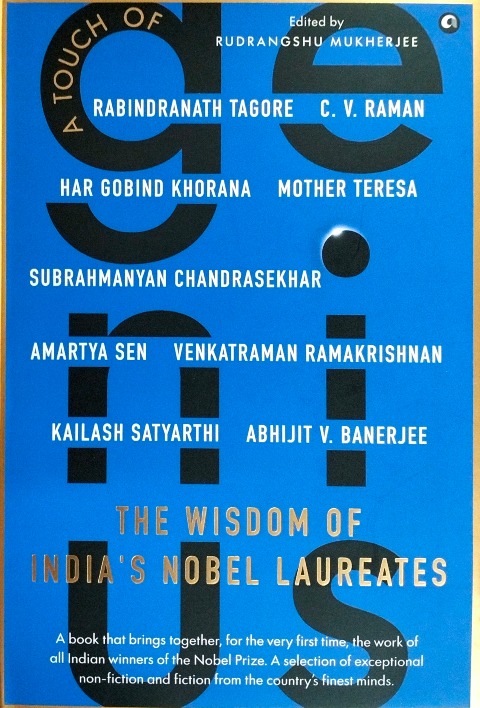
A Touch Of The Wisdom Of India's Nobel Laureates
This book brings together, for the very first time, the work of all Indian (Indian citizens, naturalized Indians, and erstwhile citizens of independent India) winners of the Nobel Prize—Rabindranath Tagore (1913), C. V. Raman (1930), Har Gobind Khorana (1968), Mother Teresa (1979), Subrahmanyan Chandrasekhar (1983), Amartya Sen (1998), Venkatraman Ramakrishnan (2009), Kailash Satyarthi (2014), and Abhijit V. Banerjee (2019). The book, which contains over seventy essays, stories, poems, songs, and prayers, is divided into ten sections—Memoir, Literature, Science, Economics, Religion and Philosophy, Aesthetics, Inequality and Injustice, Politics, India, and Nobel Lectures. Each of the sections contains illuminating chapters that provide the reader with extraordinary insights into the human condition, literature, art, science, religion, philosophy, politics, human rights, economics, and the world we live in. Composed by the country’s finest minds, the pieces in A Touch of Genius will be read and reread for a very long time to come.
-
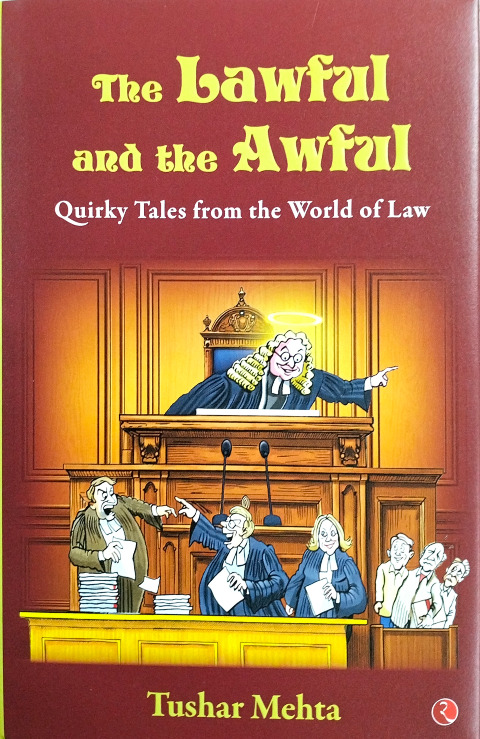
The Lawful and the Awful
The citadel of justice is solemn and serious by design. But this book looks beyond that façade, bringing together a series of intriguing and surprising episodes that will appeal not only to lawyers and judges, but to non-legal readers as well. In The Lawful and the Awful, Tushar Mehta takes the reader into the lesser-known corners of the legal world, where personality presses against principle and the law reveals a side of itself rarely seen. Drawing on real cases from courts across the world, these pages recount judges who brandished loaded pistols inside courtrooms, penned poetry instead of judgments, or pronounced sentences from improbable places; the sharp wit and wisdom of the inimitable Justice Scalia; and memorable instances of the British art of courtroom humour. Written with wit, measured sarcasm, and the practised eye of a courtroom insider, these essays do not seek either to scandalize or to sermonize. They simply remind us that the citadel of justice is not always as solemn as it appears—and that the line between what is lawful and what is awful can sometimes be thinner than we might like to believe. This blurring of the line is what makes the law all the more interesting and fascinating.
-
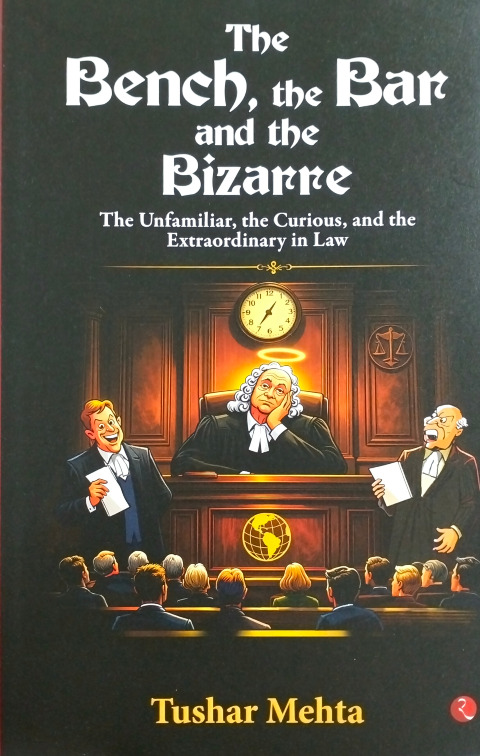
The Bench, the Bar, and the Bizarre
In The Bench, the Bar, and the Bizarre, Tushar Mehta invites you on a guided tour through the curious edges of the law—sometimes whimsical, sometimes absurd, and often unexpectedly funny. This book offers a collection of surprising and engaging incidents, events, and judgments that will appeal not only to lawyers and judges, but to non-legal readers as well. Drawing on real cases from around the world, this is the side of the law and its functionaries rarely seen: judges who expressed dissenting views in their judgments with remarkable vigour; maverick litigants who sued demons, the Devil, and even God—not out of mere eccentricity, but to prove a point; judges who harangued others over robes, wigs, and mobile phones; instances of judges unduly absorbed in social media; and those who, from the Bench, allowed authority occasionally to overwhelm restraint. Unpredictable and incisive, these episodes reveal the strange humanity that lurks behind the solemn rituals of justice—and remind us that the law, for all its dignity, can sometimes be gloriously bizarre, yet undeniably fascinating to legal professionals and lay readers alike.
-
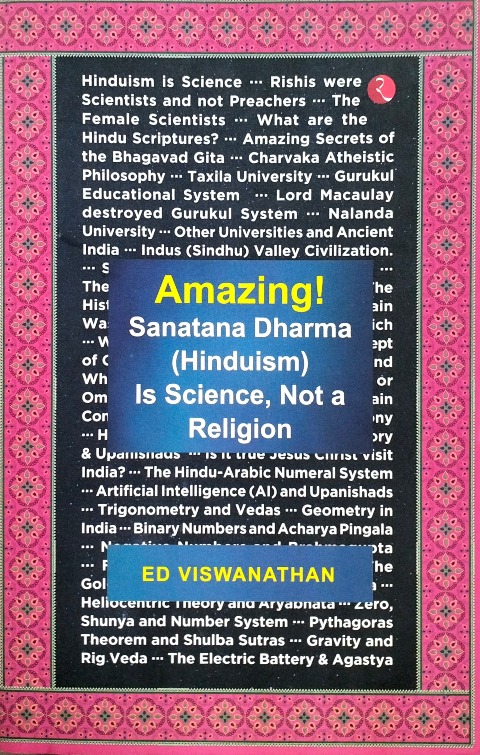
Amazing Sanatan Dharma Hinduism Is Science Not A Religion
• The numeral system was invented by India and is known as Hindu-Arabic numeral system. • The first university in the world was established in Takshashila, also known as Taxila, during 700 BCE. • Aryabhata (476–556 CE), the astronomer and mathematician, discovered ‘shunya’ or zero. • Many languages originated from Sanskrit. Some of the first words of the English language came from Sanskrit words, such as ‘father’ from ‘pita’ and ‘mother’ from ‘mata’. According to Forbes magazine, Sanskrit is the most suitable language for computer software. • The decimal system as well as the place value system were developed in India in 100 BCE. • Electric Battery: Maharishi Agastya (approximately 1500–1200 BCE) invented electricity generation as well as the use of electricity, electric wire and battery cells (formula for electric battery). • The value of pi was first calculated by Baudhayana, who lived around 800 BCE, and he explained the concept of what is known as the Pythagorean Theorem. He discovered this long before Pythagoras. • Surya Siddhanta has calculations of the diameters of Mars, Mercury, Jupiter, Venus, Saturn, Earth, Moon and Sun, as well as their distances from the planets. • Mathematical subjects like algebra and trigonometry were discovered by Indians. Quadratic equations were invented by Bhaskaracharya (1114–1185 CE). • Mayasura, in his treatise Surya Siddhanta, calculated the time taken for the Earth to orbit the Sun to nine decimal places (365.258756484). • Ayurveda, which is a part of the Hindu Upavedas, is also one of the earliest schools of medicine in the world. Charvaka, the father of medicine, consolidated Ayurveda 2,500 years ago. • Atomic Theory: Maharishi Kanada, the creator of Vaisheshika Upanishad, said in 600 BCE that paramanu (atom) is the indestructible particle of matter and discussed atomic theory long before the West did. • Rishi Sushruta (800–700 BCE) is considered the ‘Father of Surgery’. • The ‘vimana’ (aeroplane) that Mayasura built is said to be a three-storied flying craft operated by motive power generated by solar rays. Details of the Pushpaka Vimana are described in the Valmiki Ramayana. • The art of navigation was born in the river Sindh, 5,000 years ago. The very word ‘navigation’ is derived from the Sanskrit word ‘navgati’. ‘Nav’ means a ship or a vessel and ‘gati’ means speed or progress.
-
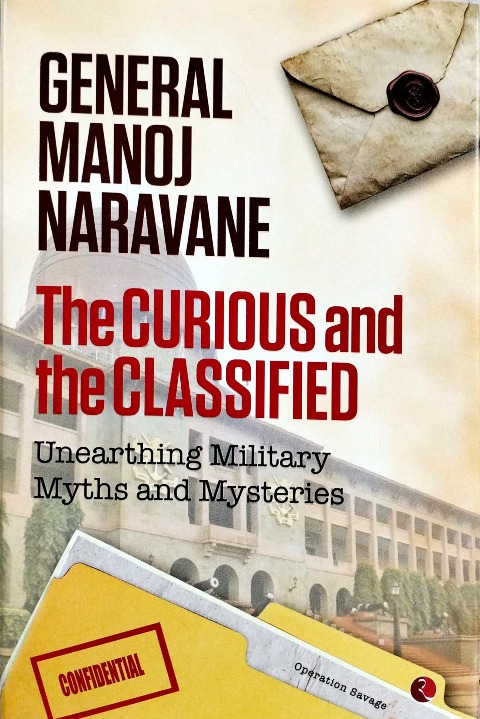
The Curious And The Classified
The Curious and the Classified: Unearthing Military Myths and Mysteries Did you know that the popular cheer of chak de phatte actually has its roots in the Sikh army of the 17th and 18th centuries? Or that Badluram, the inspiration behind the foot-tapping number ‘Badluram ka Badan’, was killed in action in the decisive Battle of Kohima in 1944? How did the city of Bangalore come to be associated with a weapon that was regarded as a game-changer during World War I? In The Curious and the Classified: Unearthing Military Myths and Mysteries, General Manoj Naravane (Retired) pulls aside the still-drawn curtains on some of the most riveting and compelling arcana that colour the legends and lore of the Indian Army, Navy and Air Force. Be it the enduring spirit of Baba Harbhajan, the fate of INS Khukri, the extraordinary sagas of airmen and their call signs, or the raw courage of Pedongi, the military mule, you will find it all and more in this thoroughly entertaining yet meticulously researched foray into the underexplored, bizarre and often wildly amusing aspects of our armed forces. Equal parts accessible, humorous and thought-provoking, and embellished with warm personal vignettes and quirky illustrations, this definitive masterwork from the man who led India’s most revered institution also shines the spotlight on the tenets of every soldier’s life—duty, loyalty, comradeship and pride in deep-rooted traditions—tested by insurmountable odds, hard choices and their lasting consequences. The Curious and the Classified: Unearthing Military Myths and Mysteries is a captivating, eye-opening, boots-on-the-ground page-turner that will excite anyone who refuses to settle for surface-level truths.
-
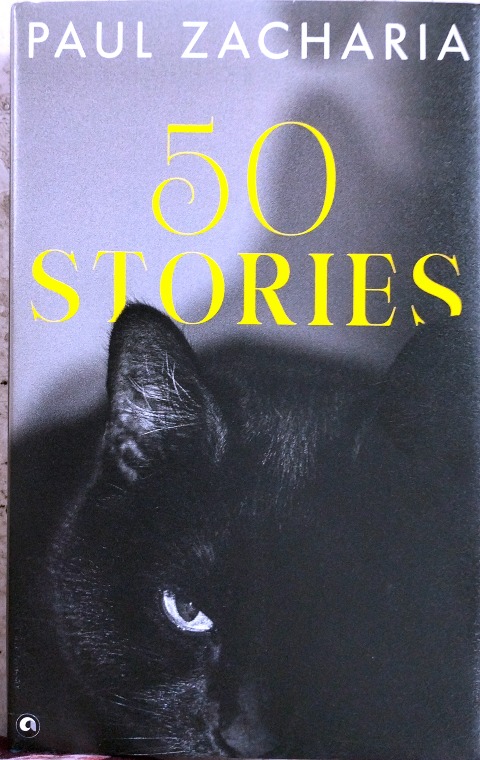
50 Stories
A young Jesus Christ in crisis goes for a shave at a barber’s shop. At a blood bank, a Dracula-esque figure draws in a desperate youth. A wild, mysterious alchemist tells his patients strange riddles. The Devil appears at the window of a devout man, asking for ten proofs of the existence of the Almighty. A man becomes the receptacle for the impulses of the dead, the thoughts sent out by black holes, and the emanations of God floating around in outer space…. These and the forty-five other stories in this book are testament to the extraordinary imagination of the awardwinning Malayalam writer, Paul Zacharia. In the worlds he conjures into being, many of them metaphysical and spellbinding, things are usually not what they might appear to be at first sight. With erudition and dark humour, the author mercilessly exposes human frailties, shows us how desire and sexuality can drive stunning outcomes, and portrays better than any politician or priest can how the intertwining of religion and politics can only lead to disastrous ends. If there is a single thread that binds these stories together it is that Zacharia’s tragicomic lens spares no one and nothing. Translated brilliantly from the Malayalam, these are stories of vivid alternate realities that will enchant lovers of magical realism, surrealism, and literature that creates a sense of wonder
-
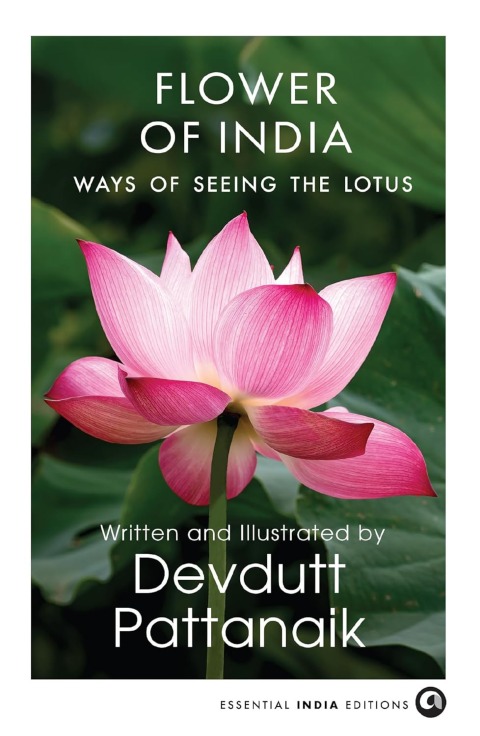
Flower Of India Ways Of Seeing The Lotus
In Flower of India, bestselling author and renowned mythologist Devdutt Pattanaik examines the lotus as one of the most pervasive and resonant symbols of the Indian subcontinent. Through its many avatars—as plant, resource, metaphor, design, and sacred form—he traces how the lotus has shaped India’s cultural imagination across history, religion, art, and everyday life. Concise yet expansive, accessible yet intellectually serious, and rooted in both lived experience and wider historical enquiry, this book offers a fresh perspective on the lotus—a symbol central to India’s cultural consciousness, and integral to the nation’s aesthetics, cuisine, erotica, romance, mythology, and spirituality.
-
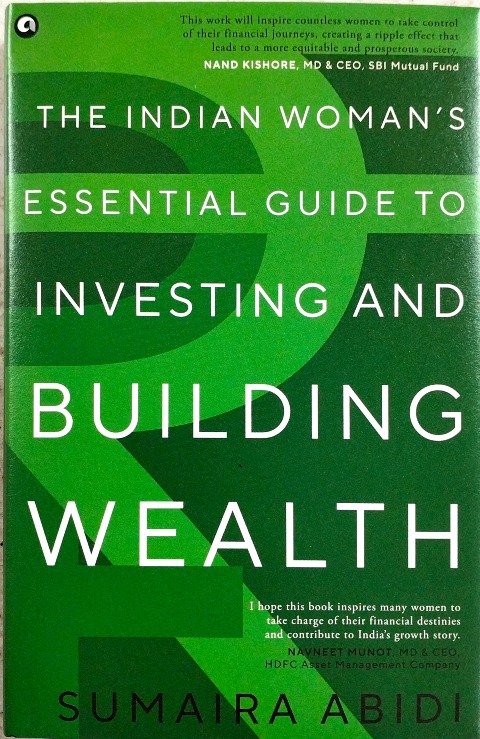
The Indian Woman’s Essential Guide to Investing and Building Wealth
The Indian Woman’s Essential Guide to Investing and Building Wealth is designed to help women transform their relationship with money. For too long, women have been encouraged to save but not to invest. Yet saving alone is rarely enough to build real financial security. In a world of rising costs and changing economic realities, understanding investing is no longer optional—it is essential. Drawing from personal experiences, real-life financial journeys, and practical investing principles, the book shows how women can move from being cautious savers to confident wealth builders. Inside, readers will learn how to: • Understand the fundamentals of investing • Build a diversified investment portfolio • Harness the power of compounding to grow wealth • Navigate financial milestones such as buying a home or planning retirement Whether you are in your 20s starting your career, navigating family responsibilities in your 30s and 40s, or preparing for retirement later in life, this book provides clear guidance for every stage of your financial journey. Along the way, it also addresses the unique challenges women face—from the gender pay gap to career breaks for caregiving.
-
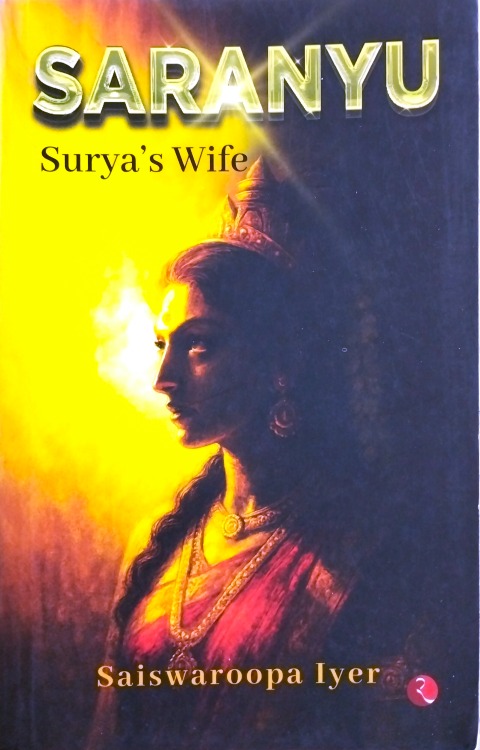
SARANYU: Surya’s Wife
Before dawn ever touched humanity, a choice was made that shaped creation itself. Saranyu, daughter of the divine craftsman Tvashtra, is wedded to Vivasvan, lord of the Sun—her beloved, yet the source of her torment. Blinded by his radiance, she forges her own shadow, Chhaya— and in doing so, sets into motion a cosmic conflict between light and darkness, duty and desire. Half Deva, half Daitya, Saranyu’s journey becomes one of rebellion and self-discovery. Torn between brilliance and shade, she reclaims her voice, her power, and her place in the order of the cosmos. Blending the grandeur of Vedic myth with the intimacy of a woman’s awakening, Saranyu reimagines the forgotten wife of the Sun—not as a consort, but as a creator, a mother, and the unseen force behind the rhythm of existence. This is her story—of love, defiance, and the choices that birthed the civilization.
-
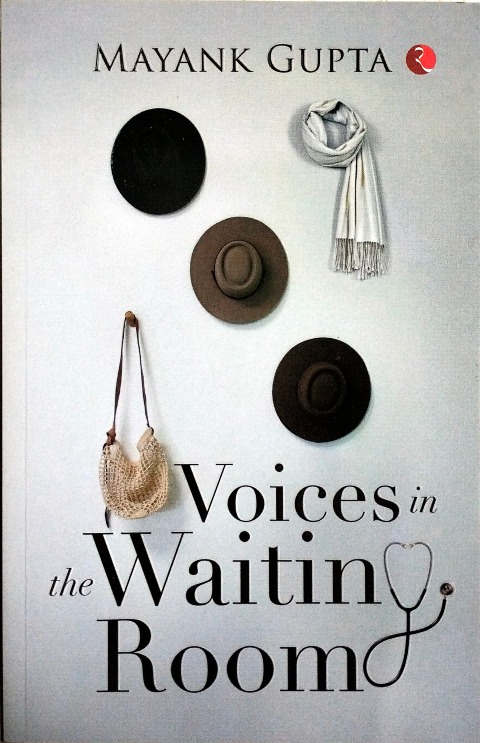
Voices In The Waiting Room
Five doctors. One hospital. A cacophony orchestrated by forced silence, ruptured memories and the quiet fight to belong. When Dr Silva receives a bangle, it threatens to unravel the life she has so carefully constructed. Around her, four colleagues carry burdens of their own. There is Dr Ankit, who fled a broken system in India and is now struggling to find a sense of home in a country that sees him as a stranger; Dr Pooja, poised on the outside but aching beneath the surface; Dr Shashi, brilliant yet adrift in the ubiquity of human connections; and Dr Jindal, a pillar of the diaspora, undone by a grief too vast to articulate. In the antiseptic corridors of a hospital in the United States, these voices intersect and intertwine, bound together by the universal need to be seen, understood and remembered. Voices in the Waiting Room is a powerful, multi-perspective debut by Mayank Gupta about identity, displacement and the fragile bonds that tether us to one another. As each voice rises, falters and finally finds its place, Gupta crafts a chorus that is both intimate and resonant.
-
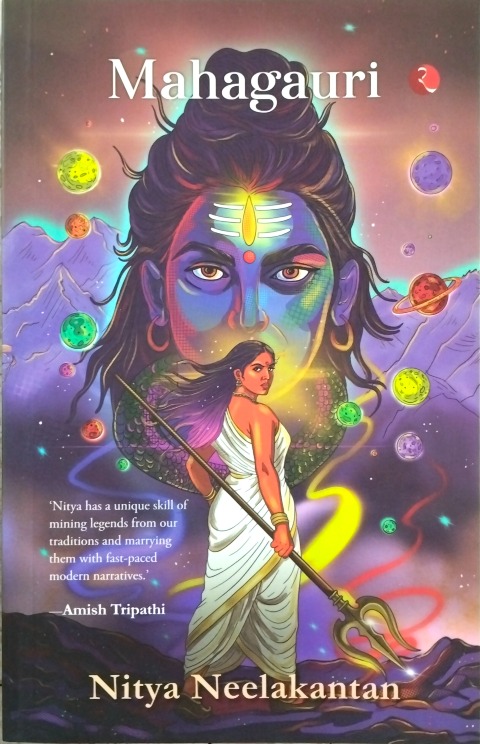
Mahagauri
The brilliant Gauri Vishwanath is a senior scientist at a top defence lab in Bengaluru. A recurring violent dream sees her transformed into a fierce warrior, wielding weapons and spilling blood on the battlefield. One night, the dream turns into a horrific reality when a freak lab accident transports her to the ancient kingdom of Saptapuri. Saptapuri is under siege—Moishan, the buffalo-demon, and his formidable army of demons are marching towards the kingdom to seize the precious Ajna Chakra. According to legend, the purple jewel, forged from the fire of Shiva’s Third Eye, grants immortality and power to whoever possesses it. Saptapuri’s only hope lies in an age-old prophecy that speaks of one of Goddess Durga’s avatars descending from another world to save them from Moishan. To Gauri’s astonishment, the prophecy points to her.
-
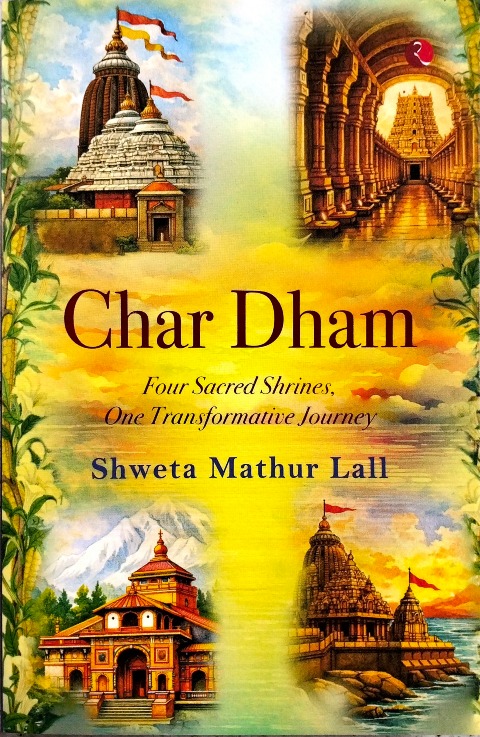
Char Dham
Char Dham : Four Sacred Shrines, One Transformative Journey Life is a Yatra, it’s a pilgrimage for the soul. Trace the footsteps that trod the path, centuries old. Embark thy soul on a journey across the sleeves of time. Rediscover, re-emerge and reinvent thine. Char Dham explores the inner you. It compels one to get acquainted with the knowledge of the past that has been forgotten and forsaken in the race against time. It urges the reader to self-transform, realize and rekindle one’s lost spirit. This journey, traversed by many, reflects on the path of spirituality and is imbued with the essence of it. Learn about the power of selfless love and the way to gain victory over one’s ego. This book weaves historical depth with thoughtful travel guidance, offering readers both context and clarity as they explore. It not only illuminates the past but also equips travellers with insights that enrich and elevate the journey itself. Char Dham propels you to the land of the HariHar: Vishnu and Shiva. Let them be your guide on this beautiful journey for your soul. Let your mind devour the knowledge, meditate and adorn your new, refurbished avatar, ready to face the world. • Life is a Yatra: Discover pilgrimage not merely as travel, but as a profound journey of the soul. • A Spiritual Awakening: Char Dham invites you to rediscover forgotten wisdom and reconnect with your inner self. • Rooted in History: Explore centuries-old traditions, sacred narratives and the timeless legacy of India’s spiritual heritage. • More than a Travel Guide: Blending historical depth with practical insights, the book enriches both understanding and experience. • Lessons in Self-Transformation: Learn the power of selfless love, humility and triumph over ego. • In the Land of HariHar: Journey into the sacred realms of Vishnu and Shiva, where devotion meets self-realization. • Renew, Re-emerge, Reinvent: Return transformed, spiritually recharged and ready to face the world with clarity and purpose.
-
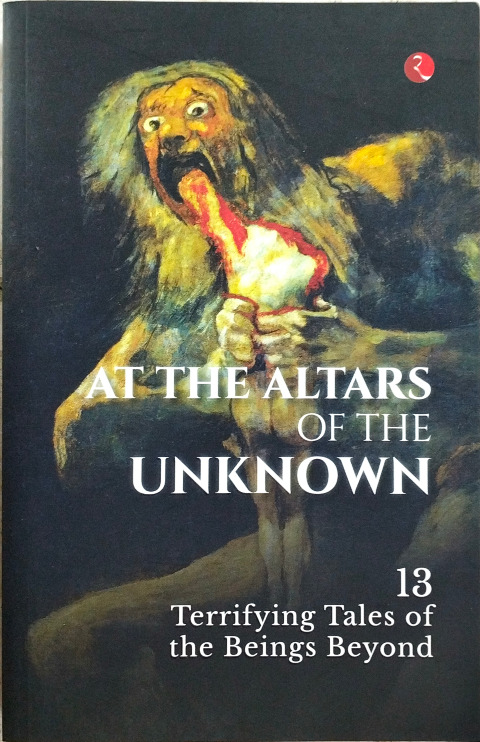
At The Altaras Of The Unkown
Just beyond the veil of reason lies the expanse of the unknown. Who goes there, nobody knows. Certain footsteps echo and certain (un)life blooms, yet it is darkness that greets us when we peek within. The unknown—the incomprehensible—demands a fearful capitulation. Thus we kneel at its altar and pray—for the respite from the need to pray. But its touch is infectious and reveals the lurking fear underneath the mundane. And there’s nowhere left to hide. At the Altars of the Unknown is a collection of 13 classic horror tales about those beings that exist beyond the veil—be they deities, demons, or visitors from outer space. Step in, why don’t you? What have you got to lose?
-
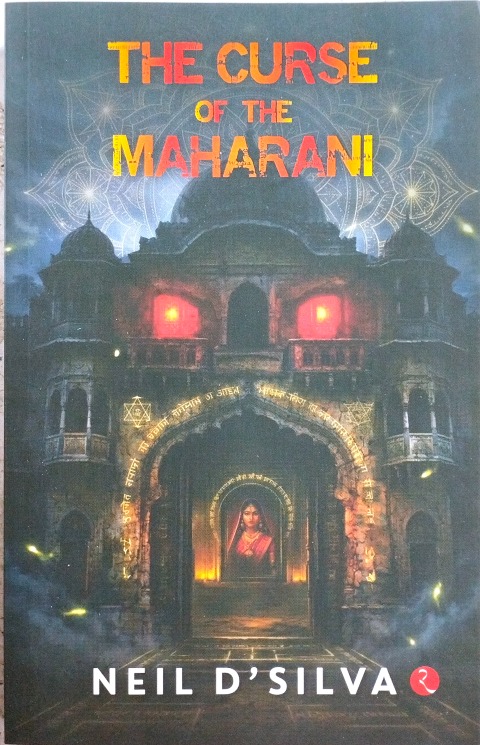
The Curse of the Maharani
The Ruhera family’s crumbling ancestral haveli in the former princely state of Samantipur has found a buyer. Young Samika and her family are summoned to Samantipur for a final family reunion before the sale of the property. Samika grabs the opportunity as she is curious about the mystery of her father’s sudden disappearance fifteen years ago. The moment she crosses the haveli’s gates, murky family secrets from the past unravel. Rumours abound that Maharani Urvashi, the infamous senior queen from the Ruhera family tree, is now the haveli’s resident ghost. As the hauntings intensify, the legend of the cursed Maharani—once dismissed as local folklore—begins to feel terrifyingly real. For generations, the men of the Ruhera family have died under strange, brutal circumstances—and always after the birth of a son. Now, with another heir on the way, will the Maharani’s curse claim its next victim? And as the past claws its way into the present, will the curse be broken to reveal a chilling truth? Neil D’Silva, bestselling author of Yakshini, delivers a page-turning narrative that leads up to a climactic supernatural battle that will challenge the very foundation of the Ruhera dynasty