

-

Letters to Milena
Letters to Milena" by Franz Kafka is a deeply personal collection that reveals not only the intense emotional connection he shared with Milena Jesenská but also the writer's own inner turmoil. Composed between 1920 and 1923, these letters were addressed to Milena, a Czech journalist and translator, who first introduced Kafka's works to Czech readers. Born in 1883 in Prague, Kafka was a German-speaking Jewish author best known for works like The Metamorphosis and The Trial. Meanwhile, Milena (1896–1944) was a spirited writer and journalist, known for her progressive views and bold critique of social injustices.
-
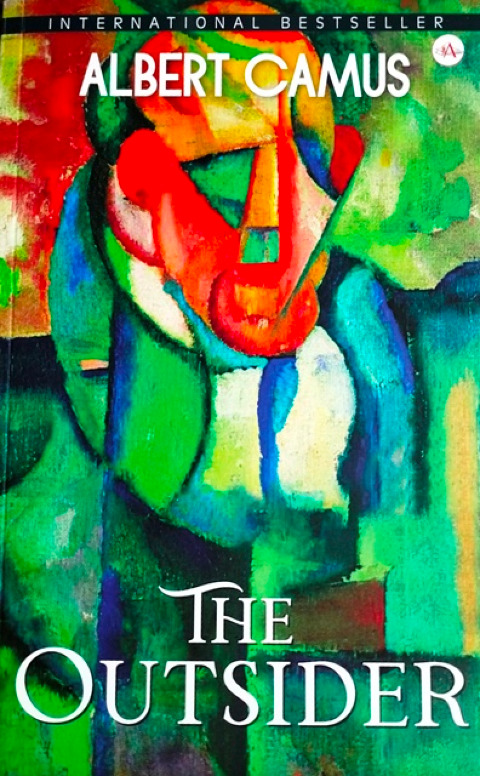
The Outsider
Albert Camus is considered as one of the most influential authors of the Twentieth century, both for the quality of his fiction and for the depth and insightfulness of his philosophy. The Outsider (The Stranger) is Albert Camus’s first novel. First published in 1942, the novel is a representation of Camus’s absurdist world view. The novel is about an emotionally detached, amoral young man named Meursault. Meursault does not cry at his mother’s funeral, does not believe in with the society that persecutes him. God. He kills an unknown man without any apparent motive. Meursault is considered as a threat to society and is sentenced to death.
-

The Castle
The Castle is enigmatic and polyvalent. Is it an allegory of the sprawling Austro-Hungarian Empire as it disintegrates into modern nation states, or a quasi-feudal system giving way to a new freedom for the subject? Is it the search by a central European Jew for acceptance and integration into a dominant culture? Is it a spiritual quest for grace or salvation, or an individual's struggle between his sense of independence and his need for approval? Is K. is an opportunist, a victim, or an outsider battling against an elusive authority? Is the Castle a benign source of authority or a whimsical system of control? Like K., the reader is presented with conflicting perspectives that rehearse the existential dilemmas and uncertainties of literary modernity.
-
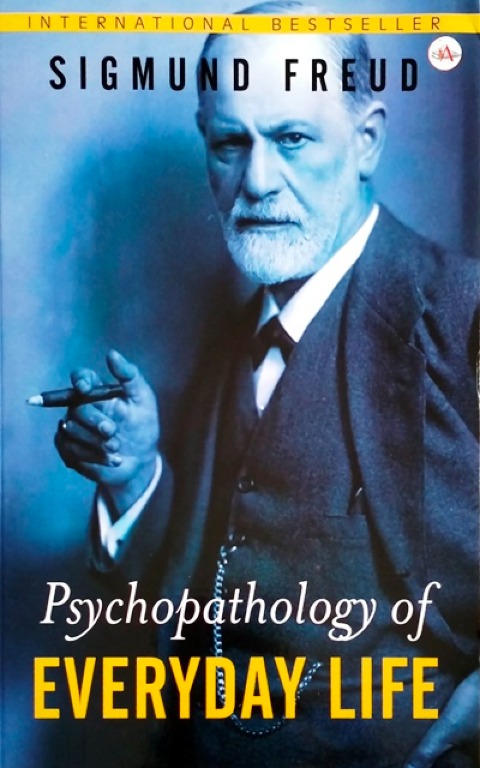
Psychopathology Of Everyday Life
Psychopathology of Everyday Life is a seminal work by Sigmund Freud, the father of psychoanalysis. This captivating book delves into the hidden meanings behind everyday slips of the tongue, forgetfulness, and other seemingly innocent errors. Freud's groundbreaking theories shed light on the unconscious mind and reveal the psychological underpinnings of common human experiences. Freud's insightful analysis of common mental phenomena and their significance. Engaging case studies that illustrate the principles of psychoanalysis. Thought-provoking exploration of the unconscious and its impact on behavior. A foundational text for students, psychologists, and those interested in the workings of the mind. A must-read for anyone seeking a deeper understanding of human psychology and behavior.
-

THE BELL JAR
The Bell Jar by Sylvia Plath is a captivating and introspective novel that falls into the genre of contemporary literature. It is a semi-autobiographical work that explores themes of mental health, identity, and societal pressures. Set in the 1950s, the story follows Esther Greenwood, a talented and ambitious young woman who experiences a downward spiral into mental illness.
-
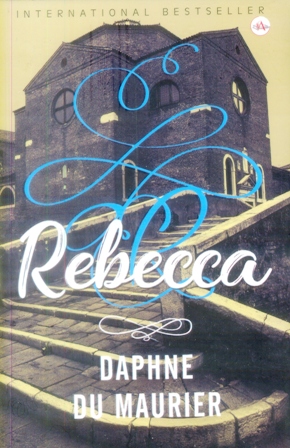
Rebecca
Sarah Waters'Rebecca is a masterpiece' GuardianWorking as a lady's companion, the orphaned heroine of Rebecca learns her place. Life begins to look very bleak until, on a trip to the South of France, she meets Maxim de Winter, a handsome widower whose sudden proposal of marriage takes her by surprise. Whisked from glamorous Monte Carlo to his brooding estate, Manderley, on the Cornish Coast, the new Mrs de Winter finds Max a changed man. And the memory of his dead wife Rebecca is forever kept alive by the forbidding Mrs Danvers . . . Not since Jane Eyre has a heroine faced such difficulty with the Other Woman. An international bestseller that has never gone out of print, Rebecca is the haunting story of a young girl consumed by love and the struggle to find her identity.