













-
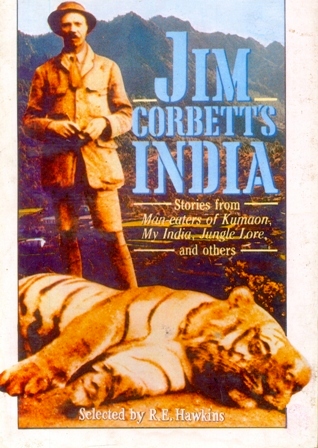
The Second Jim Corbett Omnibus: My India Jungle Lo
Jim Corbett is world famous for his classic man-eater stories. However, the three volumes collected here show a very different side to this remarkable man. In My India , he describes the villages of the Kumaon Hills, and the customs and lifestyles of the people he encountered. Jungle Lore is the closest Corbett ever came to writing an autobiography, combining recollections of his earliest days with frank views on the need for conservation which were well ahead of their time. Finally, in Tree Tops , the only book Corbett set outside his beloved India, he captures the savage beauty of Kenya's wildlife as well as telling the story of the royal visit of 1952, during which Princess Elizabeth learned she was Queen.
-
The King And I : Travels In Tigerland
With insatiable curiosity and acute powers of observation, Prerna Singh Bindra embarks on a journey through the vast canvas of India's forests, on the trail of its beautiful and endangered big cats. She begins her pilgrimage in the holy city of Rudraprayag where the legendary Jim Corbett shot a man-eating tiger, treks the snowy Himalayas in search of the elusive snow leopard, walks through the dry forest of Gir, the last abode of the Asiatic lion, searches the sterile forest of Sariska for tigers and visits the Sundarbans, home to myth and man-eating tigers. The King and I takes on special significance in today's times. The Royal Bengal Tiger is facing its worst ever crisis. Less than 2000 tigers are left in the Indian wild. Lions number fewer than 350. The fate of the snow-leopard is unknown. At least one leopard is killed every day. A celebration of India's big cats, a warning about their future, a lamentation for their passing, The King and I embodies the hope that, despite all odds, these beautiful creatures will continue to rule the wild forever.
-
The Indian Economy
The Indian Economy: Problems and Prospects, first published in 1992, looks at the country's economy and the resolved fiscal crisis from a historical perspective. Edited and updated with a new Introduction by Bimal Jalan, the book retains the thirteen essays written by eminent economic thinkers in 1991 and 1992 in their original form as they provide a comprehensive overview of India's economic development since Independence and answer questions on key economic issues that are as relevant today as they were at that time. Bipan Chandra conducts a historical survey of fiscal developments during the colonial period, the late V.M. Dandekar evaluates India's economic performance from 1950 to 1990, and Rakesh Mohan traces the history of industrial controls from the pre-independence era. Also included are essays by C.H. Hanumantha Rao, C. Rangarajan and Narendra Jadhav, Raja Chelliah, Sudipto Mundle and M. Govinda Rao, Jyoti and Kirit Parikh, Pravin Visaria, T.S. Papola, Pranab Bardhan and Kaushik Basu. In his revised Introduction, Bimal Jalan assesses the country's economic progress since 1991, examines crucial events and their relative significance. Exploring diverse aspects of the Indian economy as well as the political, institutional and legal implications of economic reforms, these insightful and revelatory essays will be of enormous interest to experts and the general reader alike.
-
Tales From The Indian Jungle
Ace hunter and wildlife chronicler Kenneth Anderson recalls real life jungle tales, some macabre and some incredible, of adventures in pursuit of man eating tigers and leopards. He brings the animal and human characters alive against the background of the jungle and the excitement and danger their co - existence generates.
-
The Tiger Roars
Hailed as the best of all Anderson's books, The Tiger Roars reminds one of the man-eating tigers he had tracked down, ferocious panthers fond of human blood, the ageing elephant meeting a sad end, and his own adventurous hours spent in the primeval jungles of India.
-
Business Sutra: A Very Indian Approach to Manageme
Business Sutra: A very Indian Approach to Management is a radical, nuanced approach to management, business and leadership in a progressively polarized world. In this landmark book, bestselling author, leadership coach and mythologist Devdutt Pattanaik shows how, despite its veneer of objectivity, modern management is rooted in Western beliefs and obsessed with accomplishing rigid objectives and increasing shareholder value. By contrast, the Indian way of doing business, as apparent in Indian mythology but no longer seen in practice accommodates subjectivity and diversity and offers an inclusive, more empathetic way of achieving success. Great value is placed on darshan, that is, on how we see the world and our relationship with Lakshmi, the goddess of wealth. Business Sutra uses stories, symbols and rituals drawn from Hindu, Jain and Buddhist mythology to understand a wide variety of business situations that range from running a successful tea stall to nurturing talent in a large multinational corporation. At the heart of the book is a compelling premise: if we believe that wealth needs to be chased, the workplace becomes a rana-bhoomi - a battleground of investors, regulators, employers, employees, vendors, competitors and customers, if we believe that wealth needs to be attracted, the workplace becomes a ranga-bhoomi - a playground where everyone is happy.
-
The Billionaire's Apprentice: The Rise of the Indi
Chronicling how a dogged team of SEC officials, federal prosecutors and FBI agents discovers and prosecutes the biggest trading case of the generation, The Billionaire's Apprentice: The Rise of The Indian-American Elite And The Fall of The Galleon Hedge Fund is a compelling read. Revolving around the sensational court case that occurred after the collapse of the Galleon Group, this book trails how a hedge fund managed more than $7 billion in assets from criminal charges of insider trading. Galleon's founder Raj Rajaratnam, was a Sri-Lankan born billionaire who was educated in Wharton and was a self-proclaimed King of Kings. One of the allegations against him that shocked the world was his involvement with the Indian businessman Rajat Kumar Gupta in the trading case. Acting as the powerful decision maker to Rajaratnam, Gupta's rise to the helm of McKinsey & Co. opened up new opportunities for Indian immigrants in America. Gupta was born in Calcutta and lost his parents at the age of fifteen. He had his humble beginnings in the Indian Institute of Technology, Delhi and went on to study at the Harvard Business School. Shortly after, he made his advent into the corporate world of America, serving on the boards of Goldman Sachs, American Airlines and Procter & Gamble. The Billionaire's Apprentice: The Rise of The Indian-American Elite And The Fall of The Galleon Hedge Fund shows how Gupta had many powerful friends including Bill Clinton. Taking you across the globe from the back streets of Calcutta to the skyscrapers of Manhatten, Anita Raghavan brings you this spellbinding behind the scenes account of the trading case.
-
The Call Of The Man-Eater
Anderson's love-hate relationship with panthers and tigers who terrorised the villagers and were eventually hunted down by the author in hair-raising encounters is legendary. In this book the jungle scenario is crowded with a hyena, a jackal, a bear, a barking deer and a few snakes which the hunter-writer tamed and kept as pets around him.
-
Warlord of Ayodhya Book 1-Rebellion
Bharat. Son of Kaikeyi.Brother of Rama. Reluctant king of Kosala. Bharat’s carefree life in Kekeya is turned upside down by the death of his father Raja Dashratha and the exile of his brother and crown prince Rama. Untrained in statecraft and unsure of himself, Bharat begins his rule over Kosala by tackling an audacious rakshasa attack on Ayodhya. There’s more trouble brewing. As the magic that sustains the kingdom starts weakening and a drought looms over Kosala, Ayodhya’s citizens begin to disappear mysteriously. Ambitious aristocrats manipulate the inexperienced king to their ends, while fickle allies seize the opportunity to assert their independence. And unknown to Bharat, the Lord of Lanka has put a cunning plan into action that will break the back of Ayodhya’s resistance. Beset by challenges, will Bharat lose Ayodhya so early in his reign? Crackling with characters overlooked and forgotten by the Ramayana, The Warlord of Ayodhya is a thrilling spinoff by bestselling fantasy author Shatrujeet Nath.
-
Harsha-The Fearless Warrior of Thanesar
Nothing is permanent in politics. Only scars remain forever. Born a royal and surrounded by luxury, Prince Harshavardhan had assumed that life would be easy. But everything changes shortly after his 17th birthday as the young prince is thrust into hostile territory all alone. A grand game of deceit beyond his age is simmering, and Harsha is the central piece. A ruthless invader, a barbaric neighbor, allies with changing loyalties and untrustworthy deputies are all part of the volatile political landscape he inherits. To add to his woes, a pair of bloodthirsty, psychotic twins stalk him across kingdoms, tracking his every move. The only thing that keeps Harsha alive is the desire to rescue his sister imprisoned by a savage rival. Will the young prince defy all odds to counter Bharatvarsh’s two mightiest kingdoms? Where will destiny take Harsha? Will the Vardhana dynasty sink into history?
-
Way of the Trader
A COMPLETE GUIDE TO THE ART OF FINANCIAL TRADING An indispensable tool for new traders who need to introduce order and structure to their daily routine and for those who are unable to remain profitable over the long run. Ian Murphy examines the job of a trader and their relationship with the market—how to survive where so many others have failed. He reveals the habits of serious professionals including essential procedures such as the ‘Eight Checks’ and the ‘Nine Filters’ which should be employed by all traders before a single penny is placed in the market. Most importantly, he explains how the ‘Five Limits of Risk’ allow us to embrace the dangers at the heart of trading, so we can face the market with confidence and clarity. Using psychology—the key to trading success—we see how the concept of a trading edge is overrated and misunderstood. Buddhist techniques for working with the mind which can be profitably employed in the market have also been discussed here. The author shares three consistently profitable trading strategies which expose opportunities inherent in the market and demonstrates how to leverage those opportunities. Way of the Trader provides a wealth of practical tools for those who wish to make a living from the markets.
-
Start-Up Marketing Strategies
11 Real-Life Cases of Indian Start-Ups Analyse real-life marketing challenges faced by start-ups from across the marketing mix of product, price, place and promotion. Eleven original case studies discuss the experiences of successful Indian entrepreneurs across a wide variety of sectors, including health tech, fintech, media and entertainment, and fast-moving consumer goods (FMCG). Each case investigates the dilemmas faced by start-ups on issues in their marketing mix and presents guidance on practical ways to resolve them through fine-tuning the marketing strategy. A special focus is placed on the views and actions of the start-up founder(s) or CEO dealing with the dilemma, to highlight their innovative solutions. The book is a highly informative guide for entrepreneurs, marketing scholars and practitioners who wish to explore the marketing challenges that new companies face and find new ways to overcome them.
-
Taj Mahal Foxtrot-The Story of Bombay's Jazz Age
In 1935, a violinist from Minnesota named Leon Abbey brought the first 'all negro' jazz band to Bombay, leaving behind a legacy that would last three decades. In a decade, swing found its way onto the streets of India. It influenced Hindi film music: the very soundtrack of Indian life. The optimism of jazz became an important element in the tunes that echoed the hopes of newly independent India. This book tells a story of India, especially of the city of Bombay, through the lives of a menagerie of geniuses, strivers, and eccentrics, both Indian and American, who helped jazz find a home in the sweaty subcontinent. They include the burly African-American pianist Teddy Weatherford; the Goan trumpet player Frank Fernand, whose epiphanic encounter with Mahatma Gandhi drove him to try to give jazz an Indian voice; Chic Chocolate, who was known as' the Louis Armstrong of India'; Anthony Gonsalves, who lent his name to one of the most popular Bollywood tunes ever; and many more. Taj Mahal Foxtrot, at its heart, is a history of Bombay in swing time.