


-
I Have Become The Tide
Githa Hariharan has written novels, short fiction and essays over the last three decades. Her highly acclaimed work includes the Thousand Faces of Night which won the Commonwealth Writers’ Prize for Best First Book in 1993, the short story collection the Art of Dying, the novels the Ghosts of Vasu Master, When Dreams Travel, in Times of Siege and Fugitive Histories and the collection of essays Almost Home: Cities and Other Places. She has also written children’s stories and edited a collection of translated short fiction, A Southern Harvest and the essay collection from India to Palestine: Essays in Solidarity. For more on this Delhi-based author and her work.
-
The Marriage Pact
It ranks with The Stepford Wives and Gone Girl as a terrifying look at what it really means to say "I do"' Joseph Finder, bestselling author of The Switch ** It's the perfect wedding gift. Newlyweds Jake and Alice are offered membership of a club which promises members will never divorce. Signing The Pact seems the ideal start to their marriage. Until one of them breaks the rules. Because The Pact is for life. And its members will go to any lengths to ensure nobody leaves . . . Praise for The Marriage Pact: 'A brilliant premise . . . tautly plotted and deftly written' J.P. Delaney, bestselling author of The Girl Before 'Beware. This book will keep you up all night' Lisa Gardner, bestselling author of Right Behind You 'Gripping, thought-provoking and irresistible' Dean Koontz, bestselling author of The Silent Corner 'It's a high-concept, fast-moving thriller . . . a gripping and intriguing read' Sunday Mirror
-
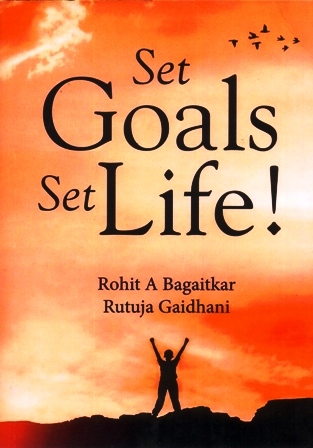
Set Goals Set Life
Success is the by-product of goal setting and a sincere effort towards achieving these goals. The process of Goal-Setting is the quest to achieve that much-desired success. Our mind is a powerful tool of manifestation that can perform miracles when guided well, and the process of goal setting intensifies that power. You are capable of achieving way more than you have right now. All you need to do is Think it, Ink it and Achieve it. After all, “Energy goes where Attention flows”. Set Goals, Set Life is for anyone who wishes to make their life better.
-

G For Gobar
Before the Modi government set up Rashtriya Kamdhenu Aayog in 2019, three young adults from Mumbai had recognized cow as natural and national wealth. Satvik Patel, reeling under the burden of crippling debts and weighty family responsibilities, feels disconnected from every - thing around. Desperations to end his financial crisis soar high. His office friends Anish and gaurav, finding that ‘Gobar’ - cow dung cakes-can pay off his debts and solve all his life problems, ask him to quit his job. Will Satvik quit his job, a survival kit, for some smelly dung cakes? What is so special about them?
-
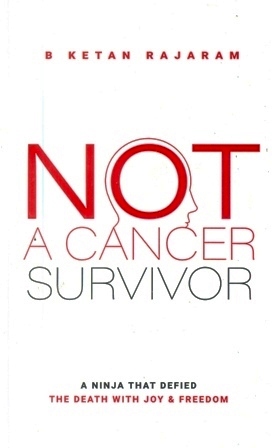
Not A Cancer Survivor
This book is for those affected by extreme situations in their lives, including Cancer. The book is not only designed to assist cancer patients and their families but allows common people to come out of such situations with an extremely positive approach. I was born as Ketan but got transformed with a second life chance to be a Ninja, who survived all extremities, including death, and is enjoying the journey of life with joy and being limitless. This journey brought me to a near-death experience but I excelled through being a spiritual and psychological Ninja to battle out the war on the King of all Maladies or Cancer. The discussion in the book is not just theoretical but gives you actionable suggestions at the end of each chapter. The content of the book works fundamentally on different layers of the body-mind complex and empowers you within to challenge the status-quo with the inner powers of a Ninja. It is a self-help guide on how to overcome extreme difficulties thrown up by life without preaching, or getting bored!. It makes you stand by the side of your health and positivity and not disease and delusion. It's a must-read for all wanting joy, freedom and happiness in life even during extremely painful situations.
-
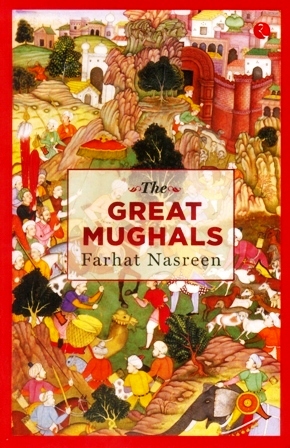
The Great Mughal
An engrossing saga of one of the greatest dynasties of the world, The Mughal dynasty contemporaries of the Mughal empire called it the sultanate-i-mughalia. In terms of the area and time that it covered, The empire was gigantic. From the warrior king Babur who laid its foundation to the Lonely poet king Bahadur Shah Zafar who saw its dilution, the book charts the origin, rise, success and eventual downfall of an empire that ruled India for three centuries. With pure history as a backdrop the narrative sweeps along the myths and mysteries of the Mughal times unfolding on its pages the Courts and harems, bazaars and battlefields, blood and gore and the gloss and glamour of the Mughal empire. Beyond the glistening surface of their glory, farhat nasreen’s authoritative account brings the empire vividly to life, rolling out the saga of the fabulously talented Rajputs and Marathi along with the challenges the Mughal emperors faced to sustain their phenomenal empire.
-
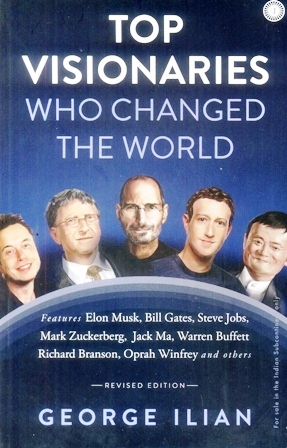
Top Visionaries Who Changed the World
Revised edition. Features Elon Musk, Bill Gates, Steve Jobs, Mark Zuckerberg, Jack Ma, Warren Buffett, Richard Branson, Oprah Winfrey and others. What if you could sit down to dine with some of the world’s most successful entrepreneurs and have a conversation with them. What would you ask them. What insights would they give to you. Find inspiring life and business lessons from visionaries such as Steve Jobs, Mark Zuckerberg, Warren Buffett and Tony Robbins, Elon Musk and Oprah Winfrey. Without passion for what you are doing, you will not make it very far in your field. Read about success and failure from visionary leaders who have built some of the most valuable organizations of the world. Learn to think like a winner. George Ilian has made his mark on the digital industry, owning an e-book business among other endeavours. He is the author of 18 books in the genre of business and motivation. George aims to inspire people across the globe through models of the world’s most successful people in concise form. “We’re here to put a dent in the universe. Otherwise, why else even be here. ”. —Steve Jobs.
-
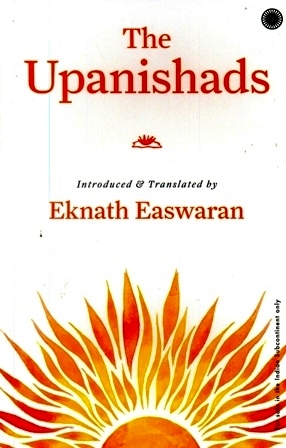
The Upanishads
The book The Upanishads is an translation of the old age Hindu religious texts and is meant for anyone exploring consciousness and spirituality. Thousands of years ago, Indian sages found the answers for some of the eternal questions of human mind, which they have passed on to the future generations through the books of Upanishads. Upanishads are guides for human beings and are said to have answers to all the questions that people have pertaining to the realization of one's own self. These books still have relevance to the modern world. The author in this book has extracted some of the important concepts from the Upanishads and has made an attempt to introduce the readers to some spiritual aspects such as consciousness, self, death, knowledge, wisdom and joy in a detailed manner. The author's explanation of the concepts in his own language of wisdom and the way he connects the texts to the world of today's advanced science and technology make the book a lucid, relevant read. Though the original text of Upanishads are voluminous with complicated language, the author has tried to condense and simplify the major teachings of the book and has presented them in a readable manner. The author Eknath Easwaran has successfully managed to present the discoveries of the sages of the Upanishads in a concise style in his book. This first edition of the book was published by Jaico Publishing House in 2009. It is available in paperback.
-

Power Pranayama
Free DVD Contains: Right postures while practicing Pranayama, Identifying correct pattern of breathing, Step-by-step technique of Pranayama, Imagery for: Stress Management, Energization, Joint Pain and Backache, Heart and Hypertension, Asthma and Allergies and Diabetes. Pranayama is in vogue today but few are really aware of its subtle yet profound effects on the mind. Pranayama involves much more than a few breathing exercises, it is a holistic experience that encompasses the body and the mind. The book explains in simple terms: how to identify and correct our faulty patterns of breathing, how to practice pranayama with understanding and safety, logical explanations for various aspects of Pranayama. Why one nostril is usually more open than the other and what are its implications on our mindset and diseasesHow Kapalbhati can offer peace of mindHow the vibrations of chanting soothe the mind and heal the bodyHow pranayama creates the interface to connect with the mindHow to program our mind towards self-empowerment, health and happiness.This book is for one and all who desire to create positive health.
-
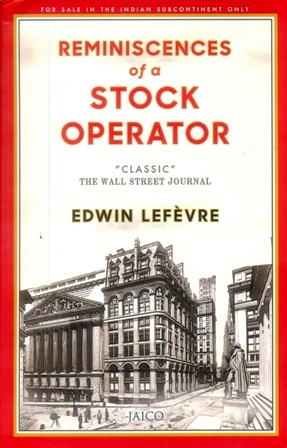
Reminiscences of a Stock Operator
THE WALL STREET JOURNAL A legend of Wall Street shares the tricks of his trade! Reminiscences of a Stock Operator is the bestselling story of Jesse Livermore or ?Boy Plunger??the famous American investor and security analyst who made his millions from the stock market. Edwin Lefèvre tracks the exploits of Livermore as he won and lost tens of millions of dollars playing the stock and commodities markets during the early 1900s. With riveting accounts of Livermore?s experiences as one of the most influential speculators on Wall Street, the book is rich with trading wisdom and rules that Livermore imparts through Lefèvre. The book?s enduring appeal rests in Livermore?s view that the market is made up of people and the excesses of the market reflect mass psychology. According to him the mistakes of individuals are frequently the result of the inability to control fear and greed. Thus, the views and lessons of Livermore continue to be relevant to every new generation of investors and traders. This book is considered a classic in business writing.
-
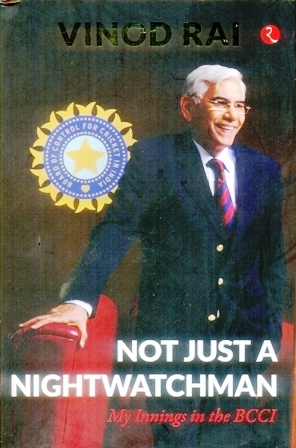
Not Just A Nightwatchman - My Innings In The BCCI
‘It is a great honour for me to have been chosen by the Supreme Court. I see my role in the BCCI only as a nightwatchman.’ When Vinod Rai humbly commented about his appointment as the head of the Supreme Court-mandated Committee of Administrators (CoA) on national television on 30 January 2017, little did he know that he would stay at the crease for 33 months! In the next few days, the CoA came to grips with their onerous responsibility—that of overseeing the administration of one of the richest sports bodies in the world, the Board of Control for Cricket in India (BCCI). Notwithstanding his ardent support for the game, Rai refused to be blind to the flaws in its governance. And so the nightwatchman decided to play on the front foot; a characteristic style that he carries forward as he describes his innings in Not Just a Nightwatchman.
-

The Making of The Greatest : Sony
Innovation has been the cornerstone of Japanese legend masaru ibuka’s business philosophy. Starting from a small radio-repair Unit in a bombed-out store in post-war Tokyo, he and his lifelong business partner akio morita built a staggering business empire straddling all seven continents. Right from its early days, Sony, as the company came to be called, continued to shock and surprise the world by coming out with one innovative product after the other: commercially successful transistor radio when even the inventors of the transistor didn't think of its use beyond creating hearing aids; a colour TV that redefined entertainment; the ‘walk man’, a new market phenomenon, that got the young generation all excited and revved up. All these in addition to a vast variety of products that became the Gold standard for the industry! Drawing on the vision of the founders, Sony has fortified their business unimaginably—with gaming PlayStation, blockbuster Hollywood movies, hit music albums and critical components for futuristic technologies, including robotics and artificial intelligence. This book is as much a tribute to the Sony founders, as it is to the dynamism and spiritedness of their successors who are proud to carry their legacy and innovations forward.
-

The Gift..
The time is the 1950s, when life was simpler, people still believed in dreams, and family was, very nearly, everything. The place is a small midwestern town with a high school and a downtown, a skating pond and a movie house. And on a tree-lined street in the heartland of America, an extraordinary set of events begins to unfold. And gradually what seems serendipitous is tinged with purpose. A happy home is shattered by a child's senseless death. A loving marriage starts to unravel. And a stranger arrives - a young woman who will touch many lives before she moves on. She and a young man will meet and fall in love. Their love, so innocent and full of hope, helps to restore a family's dreams. And all of their lives will be changed forever by the precious gift she leaves them.
-
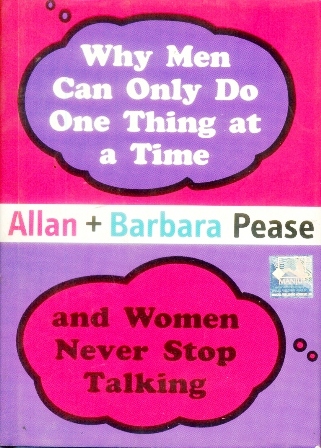
Why Men Can Only Do One Thing at a Time and Women
A light-hearted look at the differences between men and women. Thought provoking and hilarious, it draws on new findings on the brain, to shatter myths about how men and women perceive each other's behaviour.
-

Eleanor Oliphant Is Completely Fine
Funny, touching and unpredictable Jojo Moyes Eleanor Oliphant has learned how to survive but not how to live Eleanor Oliphant leads a simple life. She wears the same clothes to work every day, eats the same meal deal for lunch every day and buys the same two bottles of vodka to drink every weekend. Eleanor Oliphant is happy. Nothing is missing from her carefully timetabled life. Except, sometimes, everything. One simple act of kindness is about to shatter the walls Eleanor has built around herself. Now she must learn how to navigate the world that everyone else seems to take for granted while searching for the courage to face the dark corners shes avoided all her life. Change can be good. Change can be bad. But surely any change is better than fine?
-
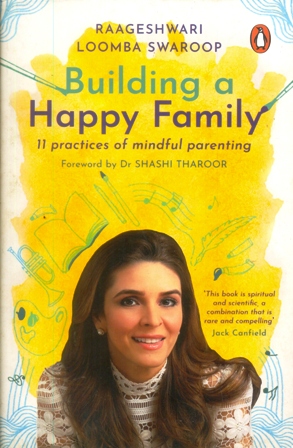
Building A happy Family
You can't have a happy family unless you're happy yourself. Raageshwari Loomba, an award-winning speaker on mindfulness, shows us how to create an excellent atmosphere for the entire family to thrive in. Her relateable style is coupled with real-life examples, such as that of Albert Einstein, who couldn't speak till the age of four and was a poor student. His parents encouraged him with love and allowed him to learn at his own pace. This, she shows, is the way to bring up your own little genius. Building a Happy Family brings to you 11 simple mindfulness philosophies that will enrich and strengthen your and your children's inner world. Through scientific research and her own intimate story of heartbreak and facial paralysis, Raageshwari emphasises how our thoughts can manifest further struggles or glory, and how teaching children early that our inner world attracts our outer world is key. Parents are taught to encourage their children's original expressions, creativity and joy, and not lose sight of it in their own lives too. This is the secret to a happy family.
-
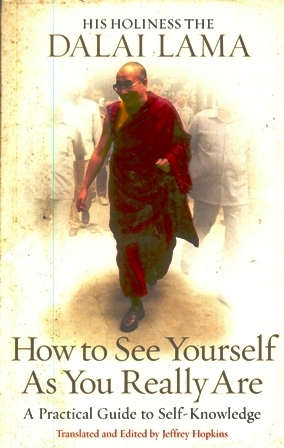
How To See Yourself As You Really Are
Full of insights and very practical, this important book by the Dalai Lama shows that self-knowledge is the key to personal development and creating positive relationships How to See Yourself As You Really Are is based on a fundamental Buddhist belief that love and insight work together to bring about enlightenment, like two wings of a bird. It provides a new perspective on the psychological problems of hurting ourselves through misguided, exaggerated notions of self, others, events and physical things. It shows how even our senses deceive us, drawing us into unwise attachments and negative actions that can only come back to haunt us in the future. Drawing on wisdom and techniques refined in Tibetan monasteries for more than a thousand years, and adopting as its structure traditional Buddhist steps of meditative reflection, How to See Yourself As You Really Are includes practical exercises and gives readers a clear path to assess their growth and personal development. The book is enlivened throughout with warm personal anecdotes and intimate accounts of the Dalai Lama's experiences as a life-long student, a meditator, a political leader and an international figure working with other Nobel Peace Laureates to address crises around the world. His Holiness the Dalai Lama is the spiritual leader of Tibet. Today, he lives in exile in Northern India and works tirelessly on behalf of the Tibetan people, as well as travelling the world to give spiritual teachings to sell-out audiences. He was awarded the Nobel Peace Prize in 1989.
-
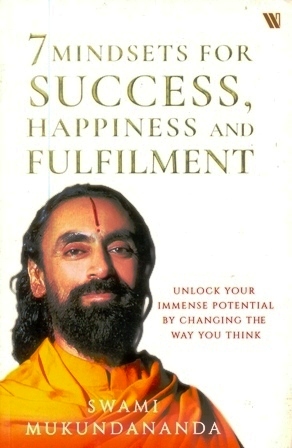
7 Mindsets For Success, Happiness and Fulfilment
Thoughts and feelings that persist over time harden into an attitude. If you live with an attitude long enough, it becomes second nature—a mindset. The wrong mindset could lead you off the path of contentment, joy, enlightenment. The right one will point you to the road to success, to fulfilment and towards an extraordinary life. Blending science with Vedic scriptures, and logic with spiritual insight, Swami Mukundananda unravels the secrets of the 7 mindsets—seven techniques of training the mind and intellect and unlocking the immense potential within. An alumnus of IIT and IIM, Swami-ji brings his decades-long mastery of Vedic scriptures to these powerful yet simple techniques for mind management and life transformation.
-
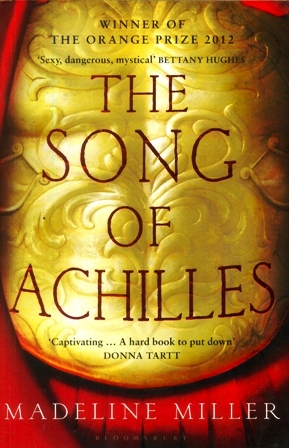
The Song Of Achilles
Winner of the Orange women's Prize for fiction The international sensation a Sunday Times and new York Times bestseller 'captivating' Donna tartt 'I loved it' J K Rowling 'ravishingly vivid' Emma Donoghue Greece in the age of heroes. Patroclus, an awkward young prince, has been exiled to the court of King Peleus and his perfect son Achilles. Despite their differences, Achilles befriends the shamed prince, and as they grow into young men skilled in the arts of war and medicine, their bond blossoms into something deeper - despite the displeasure of achilles's mother thetis, a cruel sea goddess. But when word comes that Helen of Sparta has been kidnapped, Achilles must go to war in distant Troy and fulfil his destiny. Torn between love and fear for his friend, Patroclus goes with him, little knowing that the years that follow will test everything they hold dear. 'A book I could not put down' Ann Patchett ?an exciting, sexy, violent Superman version of the Iliad? guardian ?sexy, dangerous, mystical? Bettany Hughes.
-
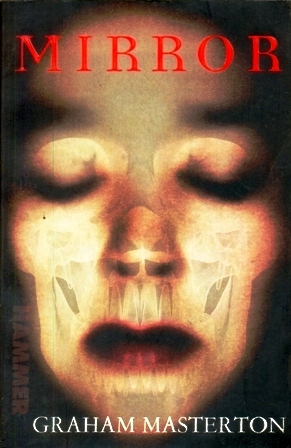
Mirror
It is said that a mirror can trap a person's soul... Martin Williams is a broke, two-bit screenwriter living in Hollywood, but when he finds the very mirror that once hung in the house of a murdered 1930s child star, he happily spends all he has on it. He has long obsessed over the tragic story of Boofuls, a beautiful and successful actor who was slaughtered and dismembered by his grandmother. However, he soon discovers that this dream buy is in fact a living nightmare; the mirror was not only in Boofuls house, but witness to the death of this blond-haired and angelic child, which in turn has created a horrific and devastating portal to a hellish parallel universe. So when Martin's landlord loses his grandson it is soon apparent that the mirror is responsible. But if a little boy has gone into the mirror, what on earth is going to come out?